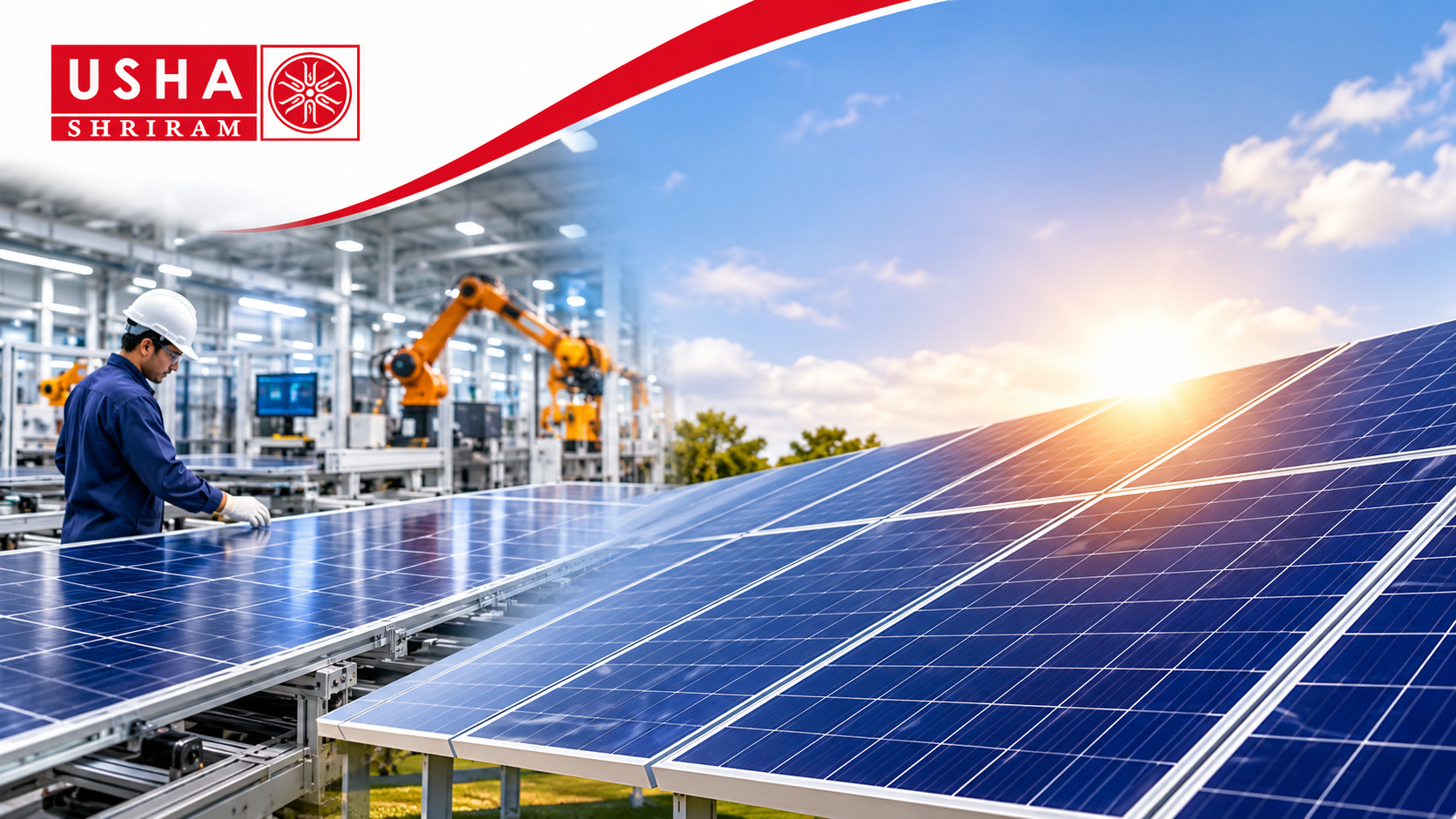
On the surface, homeowners will see a clean-looking array of dark panels on their roof producing electricity, but this is a small part of the picture. India has a growing solar panel manufacturing sector, new technologies and Government regulations are putting more of an emphasis on quality and traceability.
This can be confusing. Why is a bigger industry equal to better panels? Should I choose this make because it is made in India? What has anything to do with my electricity bill?
Manufacturing quality plays an important role in solar panel performance. However, choosing the right solar panel also requires evaluating technology, efficiency, certifications, warranty and the manufacturer’s reliability.
Why is the solar manufacturing sector growing in India?
The solar sector has grown beyond just large power parks. Cumulative solar capacity was 171.05GW as of 30th September 2026 (Ministry of New and Renewable Energy), this includes 33.41GW of rooftop-connected solar. This has created demand for modules, cells, inverters, mounting, batteries, testing, installation and service.
Solar module manufacturing in India has increased from 2.3GW in 2014 to around 172GW as of 31st March 2026 (Government of India 2026 Backgrounder). The Production Linked Incentive scheme and ALMM (Approved List of Models and Manufacturers) were key to driving manufacturing in-country.
This could mean more choice for consumers and a strong local supply chain. However, there is no guarantee that all panels will be the same. You need to ensure that the model, testing and warranty details are reliable.
How are solar panels manufactured?
Many people think that solar panels are just solar cells sandwiched between two panes of glass. They are actually made with care. Crystalline silicon solar panels involve silicon being purified, formed into ingots, sliced into thin wafers and then treated to create PV cells. These cells are then strung together, sandwiched with glass and encapsulant materials, then laminated for protection. The panel then receives its frame, junction box and wiring.
Although you don’t need to know the specifics, there are several factors that can affect the quality of the panel. These include: cell uniformity, solder, lamination, testing, framing and inspecting.
How much does a solar panel manufacturing plant cost in India?
It really depends on what they are manufacturing and how big they are.
Module manufacturers may only assemble the cells to create the finished panel. Integrated manufacturers may manufacture the cells, wafers or ingots as well. This requires more specialist equipment, utilities, testing, land and working capital. They will require more technical expertise.
Land, buildings, manufacturing lines, testing, utilities, safety systems, stock, finance, certification, staff and maintenance will all play a part. Utilisation can also be an issue. Having a large factory with no reliable orders can be detrimental.
This can be misleading. Focus on the specifics of the manufacturer. They may be large but ensure that there are clear details on the specifications, traceability and warranty.
Usha Shriram Solar
Usha Shriram Solar is an Indian solar panel manufacturer offering photovoltaic modules for residential, commercial, agricultural and utility-scale applications. Its product portfolio includes advanced solar technologies such as Mono PERC, TOPCon and bifacial solar modules, designed to meet different energy generation requirements.
How to avoid confusion
Ensure you get the exact datasheet and warranty for the module. Warranties can vary for products, performance, inverters, batteries and installation.
If you want support from a government programme, ensure the product is eligible. Guidelines for the PM Surya Ghar scheme from MNRE state that you must meet criteria outlined in the ALMM, correct IEC/BIS standards, traceability and minimum technical requirements.
Ensure you are getting a good overall quote. Mounting, cabling, earthing, safety devices, metering, approvals, monitoring, maintenance, tax and battery assumptions will all play a part. Just because the panels are cheap doesn’t mean the system will be.
Final Thoughts
India’s solar panel manufacturing industry is growing rapidly, creating new opportunities for homeowners and businesses to adopt solar energy. However, choosing the right solar panel manufacturer requires evaluating product quality, technology, manufacturing standards, certifications and warranty support.
Usha Shriram Solar offers a range of solar PV modules designed for different applications. Understanding the specifications, technology and performance of solar modules can help customers make informed decisions when choosing solar panels for their homes and businesses.
FAQ
1. How are solar panels made?
Silicon is processed into wafers and PV cells. Cells are then wired together and sandwiched between glass and encapsulant materials. Panels are then laminated and fitted with a frame. Junction boxes are added, and electrical testing takes place. The process will vary depending on the technology and manufacturer.
2. How much does a solar panel manufacturing plant cost in India?
It will depend on what they are manufacturing. A module assembly plant will be very different compared to an integrated cell/wafer plant. Equipment, land, utilities, staff, compliance and working capital will all vary. The size and level of automation will also have an impact.
3. Are Indian made solar panels better?
Not necessarily. There are many factors to consider. Ensure you compare verified standards, testing on the model, degradation, traceability, warranty, price and local service.
4. Can Usha Shriram Solar be used for residential?
Usha Shriram Solar manufactures photovoltaic modules suitable for residential solar applications. The selection of the right solar modules depends on electricity consumption, rooftop space, system capacity and installation requirements.
