Picture almost nothing being paid for rooftop solar, then like, paying nothing on electricity bills for a good while after. This isn’t just a sales line. That’s basically what the Maharashtra government is pushing through the Swayampurna Maharashtra Residential Rooftop SMART Solar Scheme, kind of word for word.
If you’ve been waiting to go solar because the upfront cost looks heavy, 2026 is the year where that excuse kind of fades , but only until the money from the state side lasts. Here’s the whole thing, laid out in a straightforward way, not too much drama.
What Is the Swayampurna Maharashtra SMART Solar Scheme?
SMART Solar Scheme is a state-supported rooftop solar plan run by the Maharashtra State Electricity Distribution Company Limited (MSEDCL) and it sits on top of the central government’s PM Surya Ghar Muft Bijli Yojana. Put together, the subsidies stack, and that’s how eligible homes end up paying only a small part of the real installation price.
The name “Swayampurna” means self-reliant, and honestly that is the idea:
let low-consumption households make their own electricity, reduce bills to near-zero, and move away from relying on an ever pricier grid.
Also, SMART is not generic “one-size” style. It is strongly aimed at:
Homes using under 100 units every month
BPL consumers
SC and ST category consumers
Economically Weaker Section (EWS) consumers
If you fall under this group, the rooftop solar setup can end up costing only a few thousand rupees, instead of tens of thousands.
How Much Subsidy Can You Actually Get?
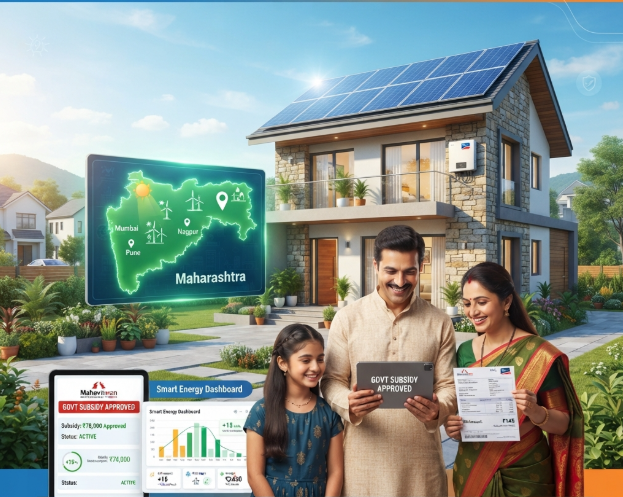
Now here comes the part people actually care about. For a typical 1kW rooftop system (roughly ₹50,000), the subsidy stacks like this:
BPL consumers — up to 95%: about ₹30,000 from the Central government + ₹17,500 from the State government. So you pay around ₹2,500.
SC/ST consumers — up to 90%: ₹30,000 Central + ₹15,000 State. Your share is around ₹5,000.
EWS general consumers — up to 80%: ₹30,000 Central + ₹10,000 State. You pay roughly ₹10,000.
So yes, you could get a working, fully net-metered grid-connected solar system for less than the price of a new smartphone. A1 kW setup generally makes around 120 units a month, which can offset the bill strongly, or even wipe it out for a low-consumption home.
To run this, Maharashtra has kept a total of ₹655 crore aside, split as ₹330 crore for FY 2025–26 and ₹325 crore for FY 2026–27. Implementation is first-come, first-served, so applying early improves your odds before allotments in your district run out.
Who Is Eligible?
Before you get too hyped, check the rules quickly. You’ll usually qualify if you:
Own a residential electricity connection with an active MSEDCL account
Use less than 100 units per month
Belong to BPL, SC, ST, or EWS categories
Have enough rooftop space, without shade, suitable for a grid-connected setup
Even if you don’t match SMART’s tighter top-up, housing societies and bigger consumers can still look at PM Surya Ghar, so checking both routes is sensible.
How to Apply — Step by Step
The process is digital, handled through MSEDCL’s portal, and linked with the PM Surya Ghar system.
First, check eligibility and confirm your monthly use stays under 100 units plus your consumer category.
Next, register online on the national rooftop solar portal / use MSEDCL’s I-SMART portal with your electricity connection details.
Then, request a technical assessment of your rooftop so they can do system design, load sanctioning, and phase connection.
After that comes approval and installation — once approved, a certified installer will set up mounting, inverter placement, grounding, and net metering properly.
Finally, inspection and subsidy transfer — MSEDCL checks the installation, and the subsidy gets credited directly, so you only pay your small consumer portion.
MSEDCL is also saying they’ll cover operation and maintenance for the first five years, which reduces the early stress for first-time adopters.
Why Panel Quality Still Matters — Even With 95% Subsidy
Most people forget one thing. Even if subsidy reduces your upfront expense, the panels decide how much value you get later.
A solar setup is basically a 25-year commitment, and Maharashtra’s conditions can be tough: coastal humidity, harsh summer heat, and heavy monsoon downpours are not friendly to low-grade panels.
As per scheme compliance, installations are required to use certified, DCR-compliant panels aligned with BIS and MNRE standards. That’s where picking the right manufacturer becomes important.
Usha Shriram Solar makes high-efficiency, Indian-made PV panels built for exactly these realities, designed to handle degradation resistance, monsoon endurance, and steady generation over decades. If you pair a near-free subsidized installation with a durable, high-output panel, that’s how you actually get the maximum benefit SMART is offering.
Don’t Wait — Funds Are Limited
Because SMART is first-come, first-served, and district-wise budgets are moving quickly, waiting may cost you the chance. If you qualify, the better move is to check and apply now, before the FY 2026–27 funds get exhausted in your area.
Want to go solar for a smaller part of the cost? Contact Usha Shriram Solar today for a free rooftop assessment, guidance for your SMART Scheme application, and certified panels made to last for the long run.
FAQ’s
Q1. What is the Swayampurna Maharashtra SMART Rooftop Solar Scheme?
ans: It’s a MSEDCL-run state subsidy scheme that tops up the central PM Surya Ghar subsidy, offering up to 95% total subsidy on rooftop solar for low-consumption BPL, SC, ST, and EWS households in Maharashtra.
Q2. How much subsidy can I get under the SMART Scheme?
ans: Between 80% and 95% of installation cost, depending on your consumer category — BPL households get the highest subsidy at around 95%.
Q3. Who is eligible for the SMART Solar Scheme?
ans: Residential MSEDCL consumers using less than 100 units of electricity per month, particularly BPL, SC, ST, and EWS category households.
Q4. How do I apply?
ans: Register on MSEDCL’s I-SMART portal (integrated with the national PM Surya Ghar portal), get a rooftop assessment, and proceed through installation and inspection.
How much Rooftop Solar Subsidy can I get in Maharashtra?
Subsidy depends on system capacity and MNRE guidelines, typically applicable for residential rooftop systems.
Who is eligible under the solar scheme in Maharashtra?
Residential electricity consumers with valid rooftop space and grid connection are eligible.
Are rooftop solar subsidies in Maharashtra available for commercial buildings?
The primary focus is residential users, though policies may vary for commercial and industrial segments.
How do I choose reliable solar panel suppliers in Maharashtra?
Select manufacturers that offer certified panels, strong warranties, and compliance with subsidy requirements.
