
Introduction
Purchasing a solar panel is a smart decision; however, many overlook that a dirty solar panel will not function as well as a clean one. The dust and debris that accumulates over time on your solar panels (such as dust, bird feces, pollen, and pollutants) will block the sunlight from reaching the cells of the solar panels.
Resulting in reduced output of electricity by 20-30%. This is essentially like throwing money away each month. Solar panel cleaning is the most important service to ensure you receive maximum returns on your solar investment.
This guide will provide you with information on how to clean your solar panels, from finding out if your solar panels require cleaning to safe methods of performing a self-cleaning process.
Why Solar Panel Cleaning is Really Important?
Do you remember the last time you cleaned your car’s windshield? The ability to see while driving was heavily affected by the accumulation. Like that, dirty solar panels operate in the same manner as your car windshield. When sunlight cannot reach the surface of your solar panels, there is no electricity generated by those solar panels.
The problem of dirty solar panels in India is huge. India experiences frequent dust storms, vehicles pollute the air, birds poops anywhere, and construction near your home. Urban environments experience a higher rate of pollution settling onto surfaces and rural areas experience more dust and agricultural residue on their solar panels.
Cleaning your solar panels can increase electricity production by up to 2–3 times. For example, when clean, a solar panel can produce 5–7 units per day, while dirty panels may generate only 2–3 units per day. Over time, this loss can add up to thousands of rupees in missed savings.
In addition to losing electricity, dirty solar panels can also cause damage over time. Some bird droppings contain acid and can stain the surface of your solar panels. When dust becomes wet, it creates a tough grime that scratches the surface of your solar panels when you attempt to clean them. Regular solar panel cleaning can prevent these problems prior to becoming costly repairs.
How to Know Your Panels Need Cleaning
Panels don’t exactly tell you when they’re dirty. Watch for these signs:
Visible dirt or bird droppings – Most obvious sign. If you can see gunk on panels, they definitely need cleaning.
Power output drops – Check your solar monitor or app. If generation drops 10-15% without other explanation (like cloudy weather), suspect dirty panels.
After dust storms – Heavy dust episodes leave panels coated. Clean them within a week or two.
Pollen season – Spring pollen covers everything. Panels included.
Long dry spells – Rain naturally rinses panels. No rain for months? Dust accumulates unchecked.
Some monitoring apps show expected vs. actual generation. When actual consistently runs below expected on sunny days, dirt is probably the culprit.
How Often Should You Clean Solar Panels?
Cleaning frequency depends on where you live and what your panels face.
Urban/Industrial areas: Every 2-3 months. Pollution builds up faster here.
Dusty regions: Every 3-4 months during the dry season. Rajasthan, parts of Gujarat, and interior Maharashtra face heavy dust.
Coastal areas: Every 4-5 months. Salt spray adds to normal dirt, but frequent rain helps rinse panels.
Rural areas with good rain: Twice yearly might suffice. Rain does some cleaning naturally.
After specific events: Always clean after dust storms, construction work nearby, or heavy pollen season, regardless of your regular schedule.
Most Indian households find cleaning 2-3 times yearly strikes a good balance between maintenance effort and keeping efficiency high.
Step-by-Step Guide to Cleaning Your Solar Panels
How to clean solar panels? Follow the steps below to clean the panels in a safe and effective way.
Step 1: Shut the system down
Safety comes first. Switch the solar inverter and the whole array off before you touch anything. Never work on equipment that carries live current.
Step 2: Choose a suitable time
Early morning or late evening gives the best results. Do not clean at midday, because the water dries too quickly plus leaves spots. A cloudy day is ideal for solar panel cleaning.
Step 3: Collect the tools
You need a soft brush or cloth, one bucket of water, a little mild dish soap if you wish, plus either a hose set to a gentle spray or extra buckets of clean water.
Step 4: Rinse first
Pour or spray water gently across the panels – this softens dust and dirt and simplifies the next step. Never use a high-pressure washer – the force can harm the glass and cells.
Step 5: Wash with light pressure
Use a brush with soft bristles made for solar panels or a soft cloth. Move in small circles. Firm pressure is unnecessary – light contact lifts dirt without scratching the glass.
If the panels are heavily soiled, add a little mild dish soap to the water. Do not use strong chemicals scouring powders or any product not sold for glass.
Step 6: Rinse again
Run clean water over every panel until no soap remains. Soap that dries on the glass leaves spots and marks.
Step 7: Dry or Squeegee
Let the panels air dry naturally, or use a solar panel cleaning wiper (rubber squeegee) to remove excess water. This prevents water spots from forming.
The solar panel cleaning system usually takes 30-45 minutes for a typical residential system. And it can vary with the size of the system.
Tools That Make Cleaning Easier
The right tool matters when it comes to solar panel cleaning, as it helps simplify the task and makes it less risky. Here are some of some of solar panel cleaning system or tool:
Solar panel cleaning brush – Soft panel brushes that are specially designed will not scratch or harm the panels in any way.
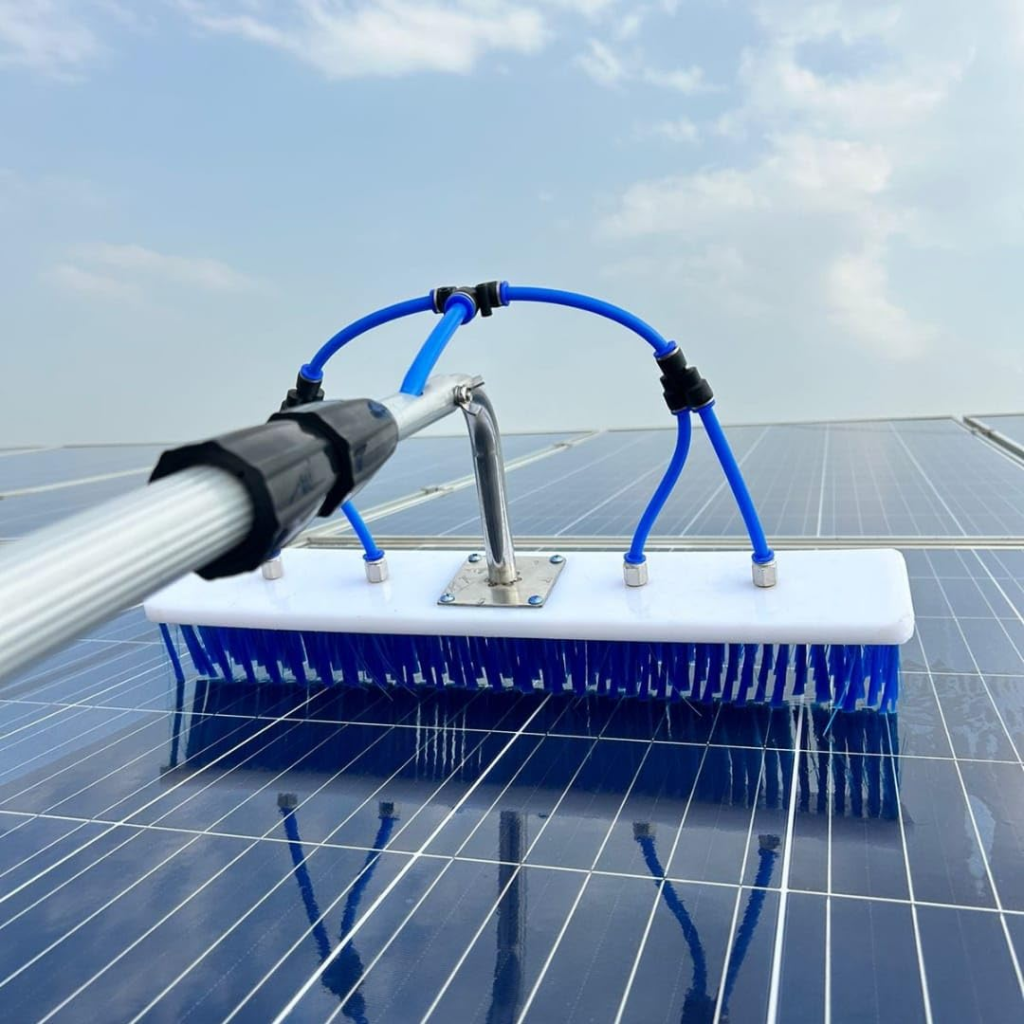
Solar panel cleaning wiper – A Rubber squeegee that does not scratch the water away. Prevents water spots.
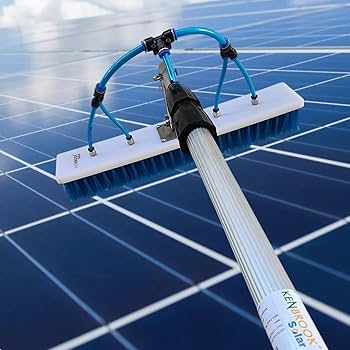
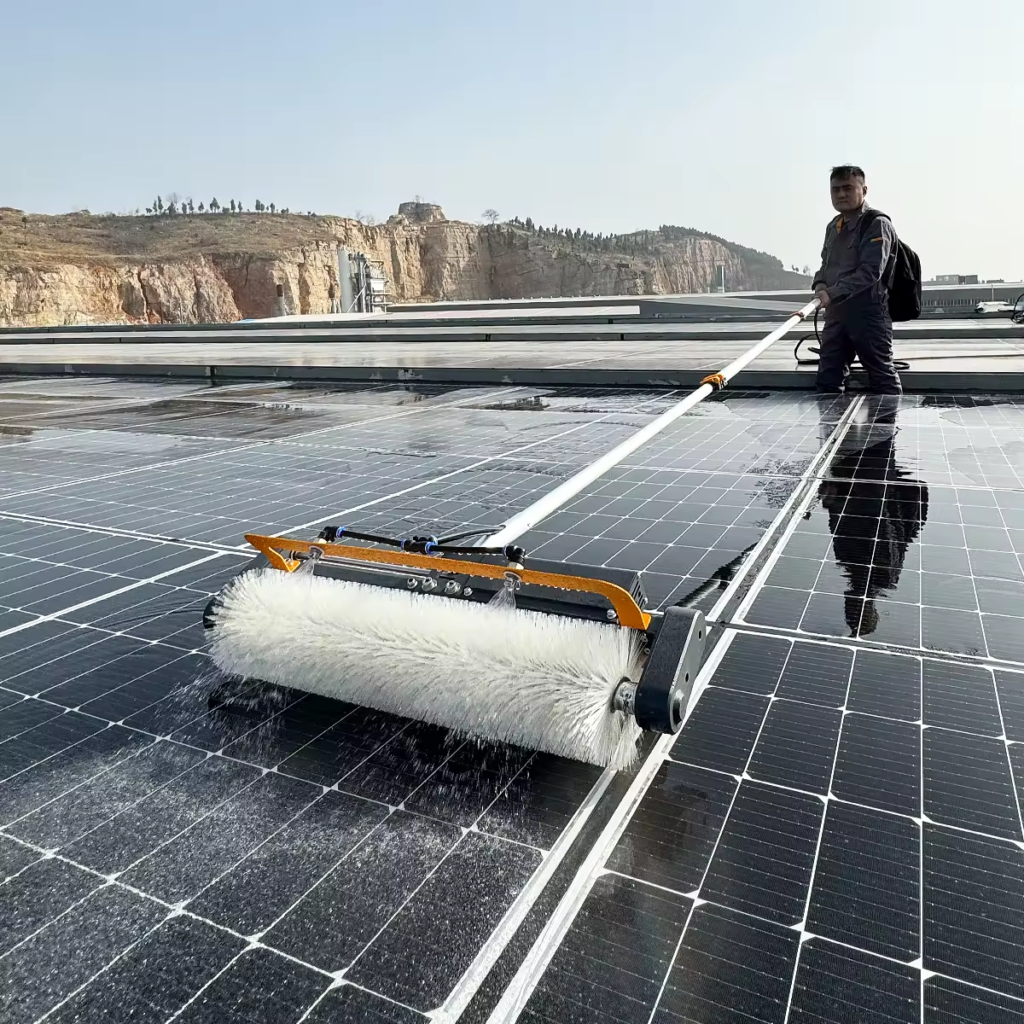
Extendable pole – Allows you to access rooftop panels at the ground level. Much safer than using ladders.
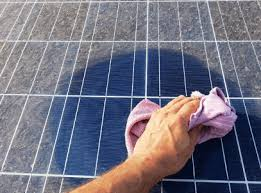
Soft cloths – Microfiber is good for solar panel cleaning. Do not use coarse scrubbers or abrasives.
Bucket and mild soap – To mix cleaning solution where necessary.
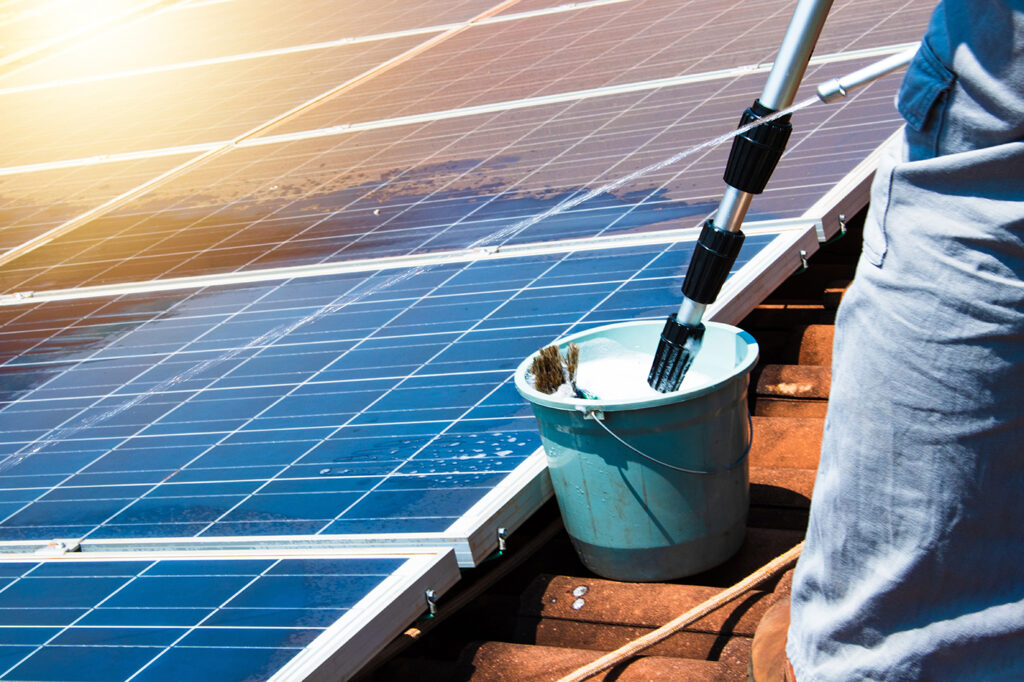
Garden hose and spray nozzle – Gentle spray nozzle for rinsing. High-pressure washers are too strong.
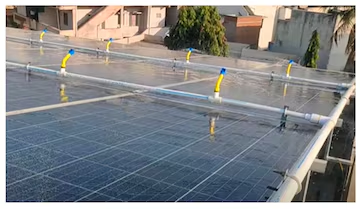
Solar panel cleaning systems that use a combination of these tools cost 1500-3000. A single investment is compensated by DIY cleaning over the years.
Safety Precautions You Shouldn’t Ignore.
Cleaning of solar panels includes rooftops and electricity. Safety isn’t negotiable:
- Do not wash in the intense sunshine – Hot panels and cold water may result in thermal shock. You will get uncomfortable, too, you see.
- Turn off the switch – Water and live electricity do not go well.
- Carry a sturdy ladder – Have one person hold the ladder steady. Better still, employ extendable poles at the ground level.
- Do not walk on panels – they are not made to support your weight. You will break them or break through.
- Wear shoes with rubber soles – Stops falling on wet floors.
- Do not use high-pressure water – Destroys seals, forcing water into electronics.
When your roof is steep, panels are difficult to access, or you feel uncomfortable working at heights, then get professional solar panel cleaning services instead.
How Much Solar Panel Cleaning Costs in India
professional services for solar panel cleaning in India generally cost rupee 500 to 1500 per session. The specific charge is based on the size of the system, the ease with which the panels can be accessed and your location. In the metro cities, the rates are higher, ₹1,000 to 1500. In the smaller towns, it may cost you 500 to 800. Commercial installations consisting of numerous panels can be a little more expensive.
DIY solar panel cleaning can help you save up in the long run. The first purchase of a good solar panel cleaning brush, a solar panel cleaning wiper, and a pole is between 1,500 and 3,000. Then you just apply water and some soap, which is nearly free. In the long run, this home-based technique will save you a great deal of money as compared to hiring professionals each time.
Conclusion
Solar panels are easy to clean, and by cleaning them, you increase the amount of electricity produced by your system in a great way. Clean panels capture more sunlight, make more power and last longer since they will not be destroyed by grime.
It does not matter whether you wash them with the proper tools or hire people; all that matters is to keep them clean from time to time. Dirty panels are not only ugly but also they waste your money every sunny day.
Book your next solar panel cleaning today. Set reminders for seasonal cleaning. Your panels produce clean energy; take good care of them. The clean panels generate greater power, reduce bills, and provide more value to your investment in solar over the years. Want to hire a Professional cleaner? Contact Usha Shriram Solar today for proper guidance!
Is it possible to use a pressure washer to clean solar panels?
No, high pressure water is not good as it may rip the panels, but a light spray of a normal garden hose with mild soap and a soft brush is okay to use.
How much will the professional rinse services of solar panels cost in India?
The cost of cleaning a regular domestic solar system would range between ₹500 and ₹1500 per cleaning session by professional sources of solar panel cleaning services.
Can I clean the solar panels by myself?
Yes, it is safe when you take the necessary precautions, such as switching off the system, using a good ladder, and putting on shoes with rubber soles.
How much can clean solar panels improve energy generation?
Clean solar panels are able to enhance electricity production by 30 percent over dirty panels, so a regular cleaning of the solar panels is always a valuable investment.
