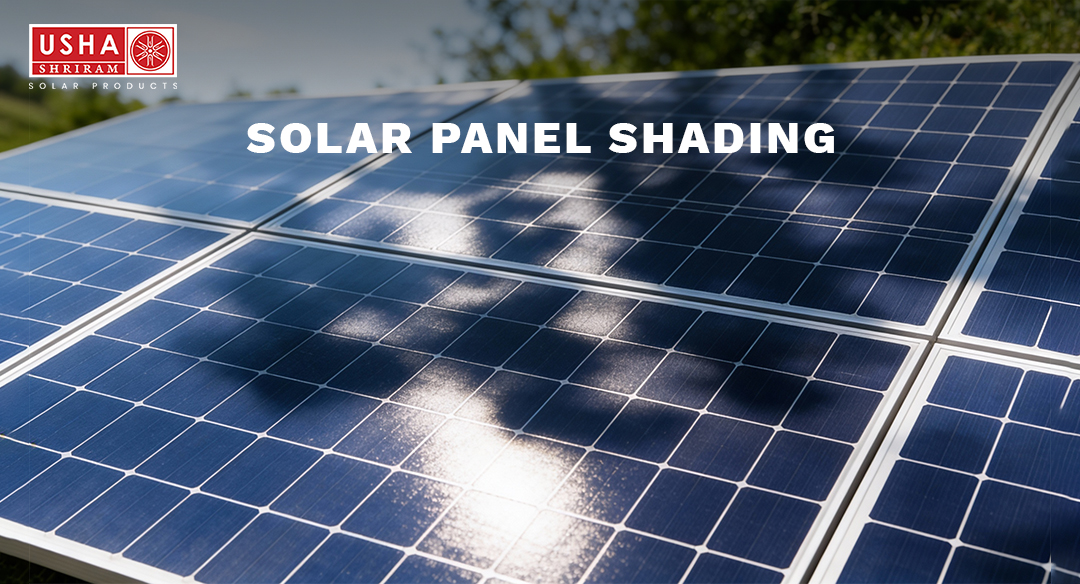
Solar panels work best when they are exposed to direct sunlight for most of the day. However, in practical scenarios, rooftops are hardly ever ideal. Trees tend to grow with time, shadows from adjacent buildings fall on the rooftop, dust accumulates on solar panels, and sometimes even a small shadow can impact electricity production beyond expectations. This issue is known as solar panel shading.
Many homeowners have installed solar panels without understanding the concept of solar panel shading and end up being puzzled when their solar panels fail to produce electricity as expected.
In this blog, we will discuss what solar panel shading is, why it occurs, the impact of shading on solar panel performance, and effective solar panel shading remedies that can help you safeguard your investment.
What Do You Mean by Solar Panel Shading?
Solar panel shading refers to the obstruction of sunlight from reaching one or more solar panels. This can be caused by tree branches, water storage tanks, adjacent buildings, electric poles, overhead power lines, or even bird droppings.
The thing that many people do not know is that even partial shading can impact the entire system. Solar panels are normally wired in series, meaning that if one panel is shaded, it can affect the performance of other panels that are connected to it. This explains why solar panel shading is one of the most common causes of underperforming solar systems.
In simple terms, the less sunlight that hits solar panels, the less electricity that is produced.
Most Common Causes of Solar Panel Shading
Understanding the causes of solar panel shading helps prevent future problems and improves long-term system performance.
Trees and Vegetation
Trees are the main reason for solar panel shading. As trees grow in size and height, they start casting shadows at different times of the day, leading to more solar panel shading problems with each passing year.
Nearby Buildings or Rooftop Structures
New buildings in the vicinity of your house can sometimes cast unexpected shadows. Even parapet walls, lift rooms, or water storage tanks can cause solar panel shading if they are not taken into account while designing the solar panel system.
Dust, Dirt, and Bird Droppings
Dust accumulation on solar panels is a major problem in Indian climate conditions. Even a small amount of dirt or bird droppings on a solar panel can cause localized solar panel shading, which can impact performance more than expected.
Seasonal Sun Angle Changes
The sun’s position changes across seasons. A roof that looks completely shade-free in summer may face solar panel shading during winter mornings or evenings.
Poor System Layout
Poor design of solar panels, improper tilt angles, or insufficient spacing between rows can lead to more solar panel shading issues, especially on smaller rooftops.
Impact of Shading on Solar Panel Performance
The impact of shading on solar panel performance is mostly undermined. Even if the solar panel is shaded on a small area, it can lead to a decrease in the overall system output of 10-30% or even more. In older or poorly designed systems, shading can even cause the shutdown of an entire string of solar panels.
The following are some common effects of solar panel shading:
- Decrease in daily energy production
- Lower monthly savings on electricity bills
- Increased stress on solar panels and inverters
- Extended payback period of the solar system investment
Over time, the solar shading problems quietly reduce the return on investment (ROI) of your solar system.
Tools to Check Solar Panel Shading
It is very essential to verify solar panel shading both before and after the installation of solar panels
Shade Analysis Tools
Solar pathfinder tools and computer software are used by professionals to analyze the movement of shadows on the roof throughout the year.
Monitoring Apps and System Data
Solar panel monitoring apps indicate consistent power reductions at the same time every day, which is an indication of a solar shading problem.
Physical Rooftop Inspection
A roof inspection can quickly reveal solar panel shading caused by trees, adjacent buildings, or newly erected barriers.
Using the right tools can help you detect the impact of shading on solar panel output early, and corrective actions can be taken.
Solar Panel Shading Solutions That Actually Work
Although solar panel shading effects cannot be eliminated entirely, proper design and maintenance strategies can minimize solar panel shading losses to a great extent.
Bypass Diodes
Most modern solar panels are equipped with bypass diodes. These diodes allow electricity to flow around shaded portions of a panel instead of stopping power generation completely. Bypass diodes help minimize the impact of shading on solar panel output, especially when partial shading occurs due to dust, leaves, or nearby objects.
Module Level Power Electronics (MLPEs)
MLPEs include technologies like power optimizers and microinverters. These systems allow each solar panel to operate independently. With MLPEs, shading on one panel does not affect the performance of others. This is one of the most effective solar panel shading solutions.
Smart Placement and Minor Adjustments
Minor layout adjustments, including the adjustment of tilt angles, greater panel spacing, or removing few objects, can go a long way in minimizing recurring solar shading problems.
Regular Solar Panel Cleaning
Dust-induced solar panel shading is one of the most common problems that can be easily corrected. Timely Solar Panel cleaning can prevent dust from building up and creating permanent shadows that block sunlight.
Ongoing Shading Management
Shading patterns vary over time as a result of tree growth, new constructions, or the changing path of the sun with the seasons. Regular inspections can manage solar panel shading issues before they impact performance.
Maintenance and Cleaning Tips by Usha Shriram Solar
Regular maintenance plays a major role in preventing solar panel shading caused by dirt and debris.
Some simple yet useful tips are:
- Schedule Solar Panel cleaning every 2-3 months in areas that are dusty or polluted
- Check the solar panels after a storm or strong winds
- Look out for new shadows created by growing trees or construction work nearby
- Check the power output to detect any sudden changes
Regular Solar Panel cleaning not only enhances power production but also helps to detect hidden solar shading issues before they become serious.
Why Ignoring Solar Panel Shading Is a Costly Mistake?
Many homeowners ignore solar panel shading because the system still produces some electricity. However, small losses accumulate over time. Reduced output means lower savings, longer payback periods, and missed benefits from solar energy.
Addressing solar panel shading early ensures your system performs the way it was designed to.
Conclusion
Solar Panel Shading is one of the most common yet overlooked problems associated with rooftop solar panel installations. Whether it is due to trees, structures, dust, or the change in sun positions with the seasons, solar panel shading can greatly impact the efficiency of solar panels if not addressed appropriately.
By understanding the causes, being aware of the impacts of solar panel shading on the efficiency of solar panels, and using effective solar panel shading techniques, homeowners can ensure that their solar panel investment is not compromised.
With proper planning, regular Solar Panel cleaning, and periodic checks, solar panel shading should not be a hindrance to efficient solar energy. To learn more about solar panel performance, maintenance practices, and ways to maximize solar efficiency, explore expert insights from Usha Shriram Solar.
