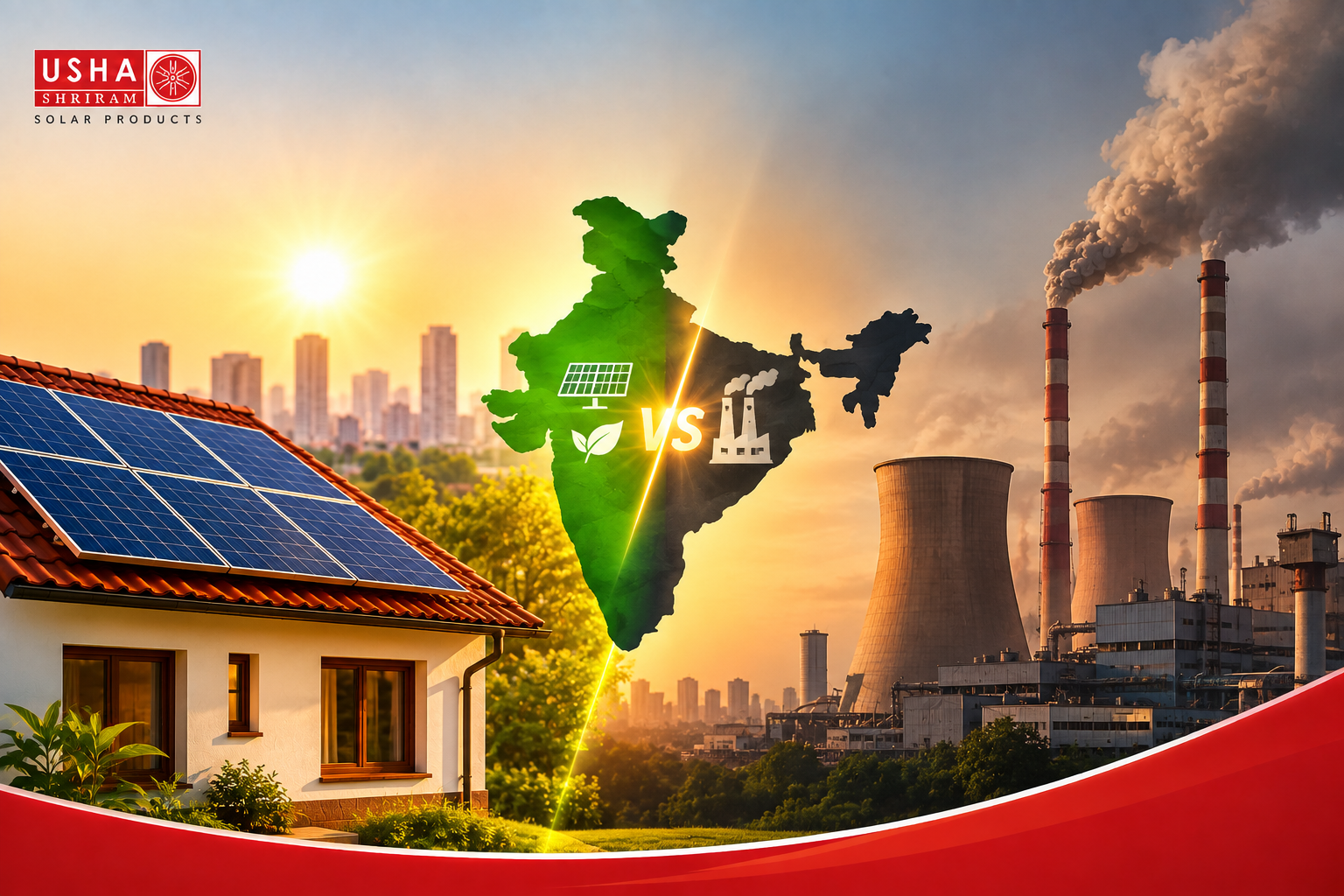
Electricity is essential for every home and business, but the way it is generated can have a major impact on cost, sustainability and long-term energy planning. In India, solar power is becoming an increasingly important alternative to conventional thermal power generation.
But how does solar power compare with thermal power? In this guide, we compare the two across fuel requirements, environmental impact, water consumption, operating costs and installation flexibility, while also exploring how businesses can benefit from solar power plants.
What Is a Solar Power Plant?
A solar power plant is a system that takes sunlight and changes it into electricity that people can use. This is done with something called photovoltaic technology. A solar power plant is different from a plant. A thermal plant uses fuel to heat water, make steam and turn a turbine. A solar power plant does not burn anything. It does not have a steam process. It also has fewer parts that move. This simple design is one of the reasons solar power has grown much. The same basic technology can be used for a setup with two panels on a roof or for a large system that provides power to an entire utility.
At its core, every solar power plant includes:
- Solar panels (modules): Made of photovoltaic cells that absorb sunlight and generate direct current (DC) electricity through the photovoltaic effect.
- Inverter: Converts DC electricity into alternating current (AC), which is the form used by household appliances, machinery, and the grid.
- Mounting structure: A framework — rooftop, ground-mounted, or elevated — that holds panels at the optimal angle for sunlight capture.
- Metering and monitoring systems: Track how much electricity is generated, consumed on-site, and exported to or drawn from the grid.
- Balance of System (BOS): Cabling, junction boxes, earthing, and protective devices that keep the system safe and efficient.
Types of Solar Power Plants
- Rooftop Solar Plants – Installed on residential or commercial rooftops; ideal for offsetting your own electricity consumption without needing separate land.
- Ground-Mounted Solar Plants – Large installations built on open land, typically used for utility-scale generation or industrial campuses with available space.
- Solar Power Plant for Commercial Use – Sized for factories, warehouses, offices, cold storage, and institutions with substantial daytime power draw. Because commercial loads often peak during sunlight hours, these installations tend to see faster utilisation of the generated power.
- On-Grid, Off-Grid, and Hybrid Systems – On-grid systems stay connected to the utility grid and can export surplus power; off-grid systems operate independently using battery storage, useful in areas with unreliable grid access; hybrid systems combine grid connectivity with battery backup for added reliability during outages.
How Does a Solar Power Plant Actually Generate Power?
When sunlight strikes a photovoltaic cell, it excites electrons within the semiconductor material (typically silicon), creating an electric current. This DC output flows to an inverter, which converts it into grid-compatible AC power. From there, the electricity either powers connected loads directly, gets stored in batteries (in hybrid or off-grid setups), or flows back into the grid through net metering, depending on how the system is configured. The entire process is silent, involves no fuel combustion, and scales linearly — more panels and inverter capacity simply mean more generation capacity.
How Is Solar Energy Better Than Thermal Power?
This is where the real comparison starts. Thermal power. Made by burning coal, gas or oil to create steam that turns turbines. Has been used in India for years and is still a big part of the electricity system. When it comes to how well it works and how good it is for the environment, solar energy has caught up or gone beyond.
1. Environmental Impact
Thermal power plants release a lot of carbon dioxide, sulfur oxides, nitrogen oxides and small particles when they burn fuel. These emissions cause problems with air quality. Are a big reason why countries try to reduce carbon emissions. A solar power plant, once it is set up, makes electricity without burning anything or creating any pollution while it is working. This makes it a cleaner way to produce power.
2. Fuel Dependency and Price Volatility
Thermal plants rely on a continuous, uninterrupted supply of coal or gas — resources that must be mined, transported (often over long distances by rail), and stored. Global fuel prices fluctuate due to geopolitical and supply-chain factors, and these fluctuations eventually reflect in electricity tariffs. Solar power runs on sunlight, a resource that requires no mining, no import dependency, and no ongoing procurement — which insulates solar plant owners from fuel-price shocks entirely.
3. Water Consumption
Thermal power generation is one of the most water-intensive industrial processes, using large volumes for cooling towers and steam generation cycles. This is a growing concern in water-stressed regions of India. Solar PV systems, by contrast, need negligible water — mainly for occasional panel cleaning — making solar a far more sustainable choice in areas facing water scarcity.
4. Running and Maintenance Costs
Thermal plants need to buy fuel all the time, get rid of ash, and take care of their turbines. They also need people with skills to work at the plant all day and all night. Solar power plants are different. They do not need to buy fuel, so they save money on that. They also have maintenance. People just need to clean the panels, check the inverters and make sure the electricity is working properly. This is why a lot of businesses save money on energy when they start using Solar power plants for some of their energy needs. Solar power plants are a choice because they help businesses save money in the long run.
5. Land Use and Setup Flexibility
Solar panels can be put on rooftops, land, parking structures and even on water. Thermal plants need a lot of space and special equipment, so they are not very flexible when it comes to where they can be built. This is a reason why solar panels have become so popular with businesses and homes that do not have a lot of land.
6. Being Independent With Energy and Predicting Costs
When you have a power plant, you make your own electricity so you do not have to rely on the main power grid as much. You are also not affected much by price increases. Because we know when the sun will be out, businesses can plan what they will do. How much they will spend on energy. This is easier than trying to guess what the power grid will cost.
7. How Long It Takes To Install
Building a new thermal power plant takes time. Several years. You have to buy land, get permission from the government and do a lot of construction. Solar power plants are different. They can be. Ready to use in just a few weeks or months, depending on how big they are. This is great for businesses that want to save money on energy without waiting a long time.
8. Government Push and Policy Support
The government of India wants to use renewable energy, and solar panels are a big part of that. Some states even offer discounts to help people buy solar panels. For example, Gujarat, Haryana, UP and Bihar all have their own programs to help people pay for solar panels. These programs can change each year. They are not usually available for thermal power projects. Solar panels are getting a lot of support from the government, which is helping them become more popular.
Solar vs Thermal: Quick Comparison
| Factor | Solar Power | Thermal Power |
| Fuel Source | Sunlight (renewable, free) | Coal/Gas (finite, priced) |
| Emissions | None during operation | High CO₂ and pollutants |
| Water Usage | Minimal (cleaning only) | Very high (cooling/steam) |
| Setup Flexibility | High (rooftop, ground, floating) | Low (large dedicated sites) |
| Installation Time | Weeks to months | Multiple years |
| Maintenance Complexity | Low | High |
| Fuel Price Exposure | None | High volatility |
| Government Incentives | Widely available for consumers | Limited for end consumers |
Is a Solar Power Plant Right for Your Business?
If your electricity consumption is high during the day — think factories, warehouses, retail chains, schools, or hospitals — a commercial solar power plant often makes strong financial sense, since your usage pattern aligns closely with solar generation hours, reducing how much surplus power needs to be exported or stored. When combined with applicable state subsidies and accelerated depreciation benefits available to businesses under current tax provisions, the overall economics can be favourable. That said, actual savings vary based on your state’s tariff structure, sanctioned load, roof orientation, and system design, so it’s worth getting a site-specific assessment rather than relying on generic online calculators.
Why Businesses Are Choosing Solar Power
Businesses with significant daytime electricity consumption — such as factories, warehouses, offices and commercial facilities — can use solar power to reduce dependence on grid electricity and improve long-term energy planning. The potential savings depend on electricity tariffs, consumption patterns, system size, available space and project design.
Choosing the Right Solar Panels: Why Wattage and Technology Matter
Solar panels are not all the same. The technology you pick will affect how well they work and how much space they need. If you have started looking into this, you have probably seen the 550-watt mono PERC panel. This is a very popular type of panel for homes and businesses in India right now.
The mono PERC technology, which stands for Passivated Emitter and Rear Cell, adds a layer to the back of the solar cell. This layer helps catch and use light that would normally go to waste. This makes the panel work better than panels.
When you are looking at panels, you should ask the person selling them about the kind of cells they use, how well they work in temperatures and how much they will degrade over time. These things are more important than the wattage of the panel.
Higher-wattage panels like the 550W variant also mean fewer panels are needed to reach a given system size, which can reduce mounting structure costs, wiring complexity, and installation time — all worth discussing with your EPC provider when planning a solar power plant for commercial use, where rooftop or land area is often a constraint.
When evaluating panels, it’s worth asking your supplier about cell technology, temperature coefficient (how much output drops in high heat), and degradation rate over the panel’s rated life, since these factors influence real-world generation more than wattage alone.
Finding the Right Solar Partner: EPC Companies and Manufacturers
Once you decide to get panels, the next big decision is who will design, buy and install the system. This is where a company that does Engineering, Procurement and Construction comes in. And the company you choose is just as important as the brand of panel you pick because how well the system is installed will affect how well it works in the run.
When comparing options among the best solar panel manufacturers in India, it helps to look beyond price alone. Consider panel technology and efficiency ratings, the company’s track record with projects similar in size to yours, how responsive their after-sales service is, and whether they manage the entire process — design, procurement, installation, and grid connection paperwork — under one roof, rather than leaving you to coordinate multiple vendors.
Among the companies that make panels in India, Usha Shriram Solar is a name that people trust for solar solutions that cover everything from start to finish. From looking at your site and designing the system to installing it and checking on it after it is installed. They do not just try to sell you a package that’s the same for everyone. Instead, they try to understand how much energy you use, how much space you have and what you can afford, and then they recommend a right system, for you.
FAQ
Q1. Is power really better than thermal power in the long run?
Solar power is an option because it has lower costs to run; it does not need fuel, and it is better for the environment once it is set up. However, you have to think about how much it costs to set it up if you have space on your roof or land and how many hours of sunlight you get in your area.
Q2. How long does a solar power plant last?
Most solar panels can make electricity for 25 years or more. But how well they work and how long they last depends on the quality of the panels, how well they are installed, and if they are maintained properly.
Q3. Can I get a subsidy for installing panels?
Some states like Gujarat, Haryana, UP and Bihar have their programs to help people pay for solar panels for their homes and businesses. But the rules and amount of subsidy are different in each state and can change, so you should check the rules in your state before you apply.
Q4. What size solar power plant does my business need?
This depends on how much electricity your business uses every day, how much space you have on your roof or land, how much electricity you are allowed to use and your budget. The best way to find out what size system you need is to have someone who knows what they are doing come to your site and check how much electricity you use.
Q5. How do I choose between solar panel manufacturers?
You should compare the type of technology they use, how much electricity they can make, how well they work when it is hot, what kind of warranty they offer and if the installer has done similar projects in your area before.
Q6. Does solar power work during days or monsoon season?
Solar panels can still make electricity on rainy days but not as much as on sunny days. That is why it is important to get a system that’s the right size for your area based on how many hours of sunlight you get in a year, not just on how much electricity it can make on a really sunny day.
Final Thoughts
Solar energy isn’t just an environmentally friendly alternative to thermal power — it’s increasingly a practical, cost-conscious choice for Indian homes and businesses navigating rising electricity tariffs, grid uncertainty, and growing sustainability expectations. Whether you’re exploring a rooftop system for your home or planning a full-scale commercial solar power plant, understanding the fundamentals — panel technology, EPC selection, sizing, and applicable state subsidies — puts you in a much stronger position to make an informed decision rather than a rushed one.
If you’re ready to explore what a solar transition could look like for your property, Usha Shriram Solar can walk you through site assessment, system design, and installation planning tailored to your specific consumption pattern and budget.
