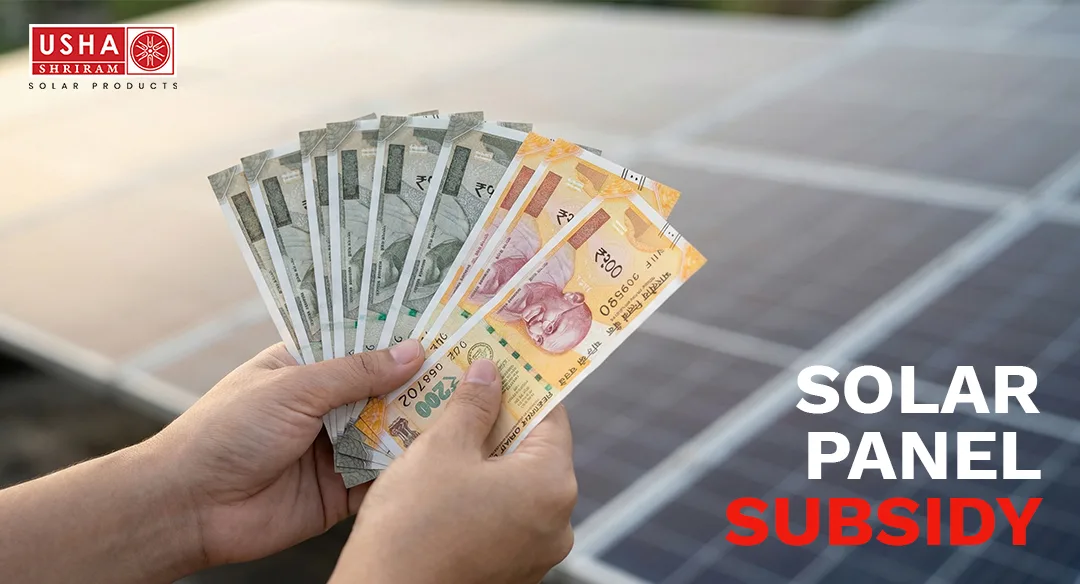
The installation of a solar power system has gone from just an eco-friendly choice to a smart financial move. The increasing cost of electricity along with its subsidy from the Indian government has resulted in an affordable Solar Panel Subsidy for homes, farmers, or businesses. The subsidy programs have taken an even better form in 2026.
This guide is your complete resource for learning everything about Solar Panel Subsidy schemes available in India, eligibility, and benefits of obtaining the right solar partner to help you maximize your savings and returns.
What Is Solar Panel Subsidy?
A Solar Panel Subsidy is a form of incentive that is provided by the government. The subsidy is actually a means through which the Indian government is reducing the costs associated with using a solar power generation system. The subsidy is provided by the government through certain schemes.
Rather than paying for solar systems in full, subsidy beneficiaries get direct funding support in terms of affordability for installing solar panels on their rooftops. The Solar Panel Subsidy is normally credited to the beneficiary’s bank account after inspection.
So, solar subsidies make it easier for you to adopt solar energy, thereby reducing the payback period.
Types of Solar Panel Subsidy in India (2026)
In India there are many types of solar panel subsidies, based on the types of user and application of the systems. Here are some of the prominent schemes available in 2026.
1. Rooftop Solar Panel Subsidy for Residential Users
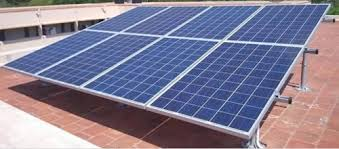
The most common and widely adopted scheme is the Rooftop Solar Panel Subsidy in India under the PM Surya Ghar: Muft Bijli Yojana. The main objective of this subsidy is to help households generate their own electricity, reduce dependence on the grid
Subsidy structure (Central):
- ₹30,000 per kW for the first 2 kW
- ₹18,000 per kW for additional capacity up to 3 kW
- Maximum subsidy: ₹78,000
This Rooftop Solar Panel Subsidy significantly reduces installation costs for homes and promotes energy independence.
2. PM-KUSUM Scheme (For Farmers)
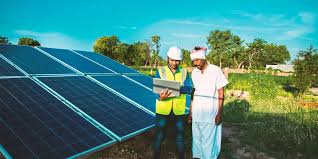
The PM-KUSUM scheme assists agricultural consumers by providing Solar Panel Subsidies for solar pumps as well as Decentralized Solar Plants.
Key benefits:
- Subsidy for solar irrigation pumps
- Option to sell surplus electricity to the grid
- Reduced dependence on diesel and grid power
This scheme helps farmers cut costs and earn additional income through solar energy.
3. State-Level Solar Panel Subsidies
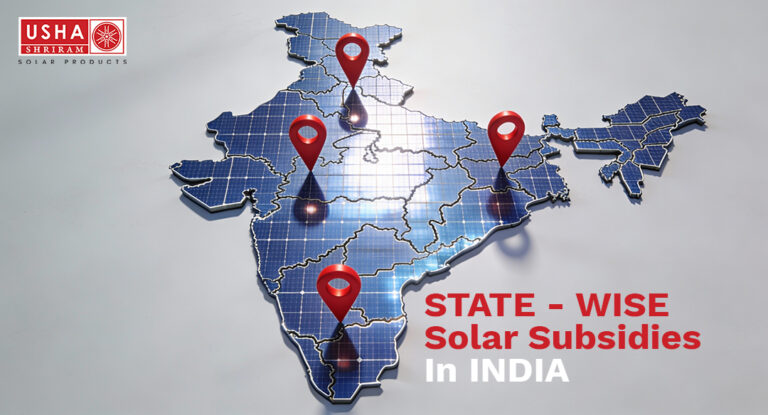
Many states offer top-up Solar Panel Subsidies in addition to central schemes.
Examples include:
- Delhi: Up to ₹30,000 additional subsidy
- Uttar Pradesh: Up to ₹30,000
- Maharashtra: Special incentives for housing societies
- Gujarat and Haryana: State-level residential subsidies
These state incentives further reduce the cost of Rooftop Solar Panel Subsidy in India.
4. MSME Solar Subsidy
Small and Medium Enterprises (MSMEs) can also benefit from Solar Panel Subsidies through accelerated depreciation and other financial incentives.
Benefits include:
- Lower operational electricity costs
- Faster return on investment
- Improved energy reliability for businesses
Benefits of Solar Panel Subsidy
Why is the government helpful with the subsidy when it comes to solar power installations? And what is there to interest you, apart from the incentive?
Extremely Low Cost – The subsidy for rooftop solar panels makes this upgrade very economical for you. The subsidy of ₹78,000 reduces your payback period from 7-8 years to merely 4-5 years. Then, electricity is free for the next 20+ years.
Faster ROI – Because of lower installation expenses, you will start to save immediately. Reductions in your electricity bills from ₹3,000-₹4,000 to ₹200-₹500 per month will convert to instant savings.
Quality Assurance: subsidy schemes need certified equipment that conforms to the standards set by MNRE. You can’t simply install low-cost, non-certified solar panels. This is a safeguard against faulty work that can fail after a few years.
Environmental Impact – Solar power comes under clean energy. Each kilowatt of energy produced per hour means less consumption of power from coal-based plants. In 25 years, a 3 kW solar system means reducing 90 tons of CO2 emissions.
Energy Independence – The grid experiences power outages. The price of electricity continues to increase. Solar energy makes you independent of other electricity sources. Your system also feeds electricity back to the grid through net metering. Therefore, you continue to save money.
Property Value Increase – Properties with solar systems sell quicker and fetch a good price due to the benefit of saving on electric costs that it brings to the property owner.
Who Benefits from These Subsidies?
The solar panel subsidy is mainly aimed at residential property owners. The following people qualify for the subsidy:
Homeowners – If you are a house, apartment, or villa owner and have rooftop access, you are eligible. Both private houses and housing societies are eligible to apply.
Middle Class Families – One thing that the plan specifically aims for is that solar power will be within the reach of ordinary families, as opposed to only rich ones who could afford the solution anyway.
City and Rural Citizens – Location is not a consideration here. It could be Mumbai or a small town in Uttar Pradesh—the same benefits apply for subsidized schemes.
What you require – Proof of ownership of the property, sufficient un-shaded rooftop area (approx. 100 sq ft/kW), and willingness to get connected to the main grid via net metering.
Important Note: The subsidy for rooftop solar panels in India does not apply to any commercial or industrial settings. The subsidy program has residential usage only.
How Usha Shriram Solar Maximizes Your Subsidy?
Receiving this subsidy does not happen by default. Paperwork requirements, compliance issues, quality criteria – all this poses a challenge to most people. This is where Usha Shriram Solar’s expertise counts.
Government-Approved Channel Partners: Usha Shriram Solar works with officially empanelled EPC channel partners and registered distributors under the PM Surya Ghar rooftop solar initiative, ensuring full compliance with government norms and subsidy eligibility.
DCR-Compliant Solar Modules: We offer DCR-certified solar panels, including 550W DCR bifacial modules and 585W DCR TOPCon mono bifacial modules, suitable for government rooftop solar subsidy projects.
Installation Quality – This is where the government checks before issuing subsidies. Our installation specialists have the necessary knowledge on all installation processes such that all necessary requirements are fulfilled.
Pricing Transparency – We provide detailed breakdowns showing system cost, the amount of subsidy, and what you have to pay. No surprise charges that come up afterwards.
Performance Warranty – Our panels are backed by 25-year performance warranties. This guarantees that the subsidized capital stock of your project continues to deliver returns for many years to come.
Post-Installation Support – Questions about net metering? Issues with the electricity department? Performance monitoring? We don’t disappear after installation. Ongoing support ensures you maximize solar benefits.
Maximize your subsidy and long-term savings with Usha Shriram Solar today.
👉 Speak to a solar expert
Taking Your Next Step
The rooftop solar panel subsidy in India represents a limited-time opportunity. Government budgets for these programs aren’t unlimited. As more people apply, funds deplete. Getting in now means securing benefits before potential future policy changes.
Usha Shriram Solar makes claiming your solar panel subsidies straightforward. We’ve guided thousands of families through this process. Your part is simple – contact us, we’ll assess your rooftop, explain exact costs and subsidy amounts for your situation, and handle the rest.
Stop paying rising electricity bills when the government will help you install a solution generating free power for decades. With over 7 years of experience, Usha Shriram Solar turns the complex subsidy process into a smooth journey toward energy independence.
Planning to install rooftop solar with a government subsidy?
Contact Usha Shriram Solar today. Call us to schedule a free consultation with an energy expert, including a no-cost site evaluation and exact subsidy breakdown for your home.
Who is eligible for rooftop solar panel subsidy in India?
Any residential homeowner with a valid electricity connection and sufficient rooftop space is eligible for the rooftop solar panel subsidy in India, provided the system is installed by an MNRE-approved vendor.
Is rooftop solar subsidy available for 3kW solar systems?
Yes, rooftop solar subsidy is available for 3kW solar systems in India. Homeowners can receive a combined subsidy amount under the central government scheme, subject to approval.
How long does it take to receive the rooftop solar subsidy amount?
The rooftop solar subsidy amount is usually credited within 30–60 days after successful installation, inspection, and net metering approval.
Can I apply for a rooftop solar subsidy through an installer?
Yes, homeowners can apply for rooftop solar panel subsidies in India through an MNRE-approved installer like Usha Shriram Solar, ensuring correct documentation and faster approvals.
