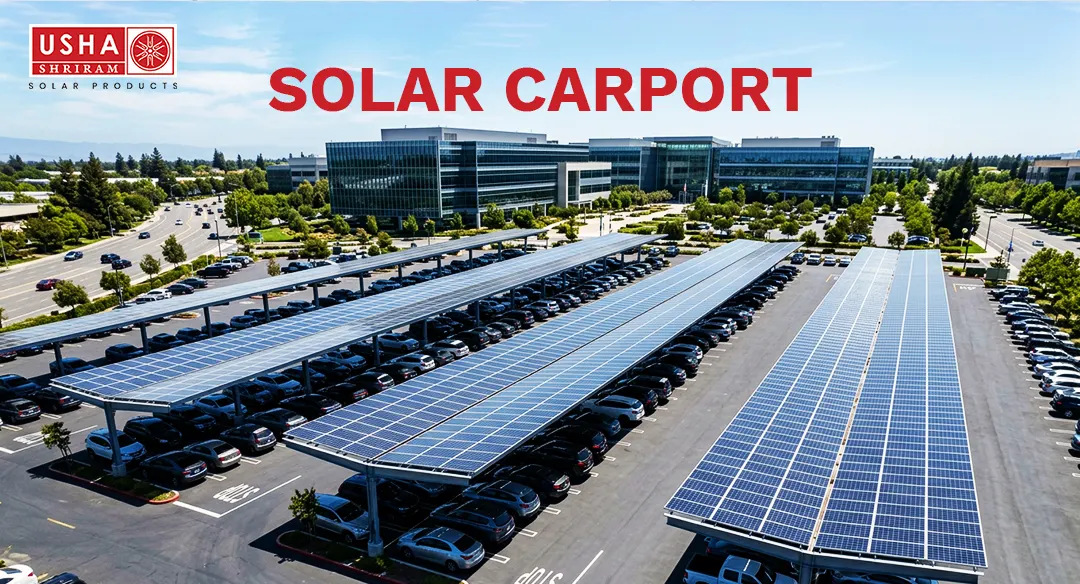
India receives abundant sunlight throughout the year, making it one of the best countries in the world to adopt solar energy. While rooftop solar panels have become very common, a newer and equally useful solution is gaining popularity — the solar carport.
A solar carport does two things at once. It gives vehicles a covered parking space and, at the same time, generates clean electricity from sunlight. Whether you own a home, a business, or a large commercial facility, a solar carport is a smart way to make the most of your available space.
In this guide, we will walk you through what a solar carport is, how it works, its benefits, and how the installation process works in India.
What Is a Solar Carport?
A solar carport is a canopy-style structure fitted with solar panels on its roof. It is built over a parking area — whether for two-wheelers, cars, or large vehicles — and the solar panels on top capture sunlight and convert it into usable electricity.
Unlike rooftop solar panels, a solar carport does not require any modification to your existing building. It is a standalone structure that can be installed in open parking lots, driveways, factory yards, or open land areas.
In simple terms, a solar carport turns an ordinary parking space into a power-generating unit.
How Does a Solar Carport Work?
The working of a solar carport is very similar to a regular solar power system. Here is a straightforward breakdown:
Step 1 – Sunlight is absorbed: Solar panels placed on the carport roof absorb sunlight throughout the day.
Step 2 – Electricity is generated: The panels convert sunlight into direct current (DC) electricity.
Step 3 – Inverter converts the power: A solar inverter converts the DC electricity into alternating current (AC), which is the type of electricity used by homes and businesses.
Step 4 – Power is used or stored: The electricity generated can be used immediately, stored in batteries for later use, or sent back to the grid through net metering.
The system works continuously during daylight hours, and any extra electricity generated can help reduce your monthly electricity bill significantly.
Benefits of Solar Carports
There are many reasons why homeowners and businesses are choosing solar carports today.
Dual Use of Space A solar carport uses space that is already being used for parking. You do not need extra land or roof space — your parking lot becomes a power plant.
Shade and Vehicle Protection Vehicles parked under a solar carport are protected from direct sunlight, rain, and dust. This helps keep cars and two-wheelers in better condition over time.
Lower Electricity Bills The electricity generated by the solar carport can directly power your home, office, or factory, reducing your dependence on grid electricity and cutting down on monthly bills.
Environment Friendly Solar energy is clean and produces zero emissions. By choosing a solar carport, you are contributing to a greener and more sustainable India.
Additional Income through Net Metering Any surplus electricity generated can be exported to the grid, allowing you to earn credits on your electricity bill.
Long-Term Investment A well-maintained solar carport can generate electricity for over 25 years, making it a reliable long-term investment for any property.
Commercial Solar Panel Projects: How Businesses Saved Millions with Solar
Types of Solar Carports in India
Solar carports come in a few different designs depending on the type of property and the number of vehicles to be covered.
Single-Row Carport This is a basic structure suitable for small homes or offices with limited parking space. It can cover one to four vehicles and is easy to install.
Double-Row Carport Designed for medium to large parking areas, this structure covers vehicles on both sides and is commonly used by commercial offices, malls, and schools.
Cantilever Carport This design has support columns only on one side, making it ideal when space is limited on the other side. It provides a clean, modern appearance.
Large-Scale Commercial Solar Carport For factories, warehouses, and large institutions, multi-bay solar carports cover hundreds of vehicles at once. These are connected to a larger power system and can generate significant amounts of electricity.
In India, commercial solar carports are becoming especially popular in states like Rajasthan, Gujarat, Maharashtra, and Uttar Pradesh due to high solar irradiation levels and growing energy demands.
Solar Carport Installation Process
Installing a solar carport involves a few straightforward steps. Here is a simple overview of how the process typically works:
1. Site Survey and Assessment A team of solar professionals visits your location to assess the available space, the number of vehicles to be covered, shadow analysis, and the amount of electricity you need. This helps in designing the right system for your property.
2. System Design and Approval Based on the survey, a customised design is prepared for the solar carport structure and the solar panel layout. Necessary approvals and permits are arranged before installation begins.
3. Foundation and Structure Setup The carport structure is erected using strong galvanised steel or aluminium frames. These are built to withstand wind, rain, and other weather conditions.
4. Solar Panel Mounting High-quality solar panels are fixed onto the carport roof in an optimal angle to capture maximum sunlight throughout the day.
5. Electrical Connections Inverters, cables, and other electrical components are connected. If net metering or battery storage is included, those systems are set up at this stage.
6. Testing and Commissioning Once everything is installed, the system is tested to ensure it is working correctly and producing electricity at the expected levels.
The entire solar carport installation process typically takes a few days to a few weeks, depending on the size of the project.
The Role of Silver in Solar Panels: Why Silver Matters in Solar Panel Production
Applications of Solar Carports in India
Solar carports are suitable for a wide range of settings across India:
Residential Homes: Homeowners with open driveways or parking spaces can install a small solar carport to power their household needs while protecting their vehicles.
Commercial Offices and IT Parks: Large office complexes with open parking lots can significantly reduce electricity costs by installing a commercial solar carport.
Shopping Malls and Retail Stores: Malls use a large amount of electricity for lighting and air conditioning. A solar carport in the parking area can offset a good portion of this cost.
Schools, Colleges, and Hospitals: Institutions with open grounds or parking lots can use solar carports to generate clean energy and also serve as an example of responsible energy use.
Industrial Facilities and Warehouses: Factories with large open yards can install multi-bay solar carports to power their machinery and operations at reduced costs.
EV Charging Stations: Solar carports are an ideal pairing with electric vehicle (EV) charging stations. The electricity generated by the carport can directly charge EVs parked underneath — a truly self-sufficient setup.
Conclusion
A solar carport is one of the most practical and space-efficient solar solutions available today. It turns an otherwise ordinary parking space into a source of clean, reliable, and cost-saving electricity.
Whether you are a homeowner looking to reduce electricity bills or a business aiming to go green and cut operational costs, a solar carport is worth serious consideration. With India’s strong solar potential and growing focus on renewable energy, now is the right time to make this smart investment.
At Usha Shriram Solar, we offer end-to-end solar solutions tailored to your needs — from site assessment and system design to installation and after-sales support. Get in touch with us today to explore how a solar carport can work for your home or business.
