Power outages occur. The cost of grid electricity keeps rising. Solar panels produce electricity only during the daytime. These three factors pose a challenge – how can you provide 24/7 electricity that is both reliable and affordable?
The hybrid solar inverter is a beautiful solution to this problem. It integrates the best of both worlds – the grid tie and off-grid solutions – to provide you with a reliable power supply irrespective of what is happening to the grid or the sun.
Unlike conventional inverters that support only one source of power, hybrid solar inverters are capable of switching between solar panels, batteries, and grid electricity. This makes them ideal for Indian homes that are struggling with an unstable power supply from the grid and want to get the most out of solar investments.
Understanding Hybrid Solar Inverter Basics
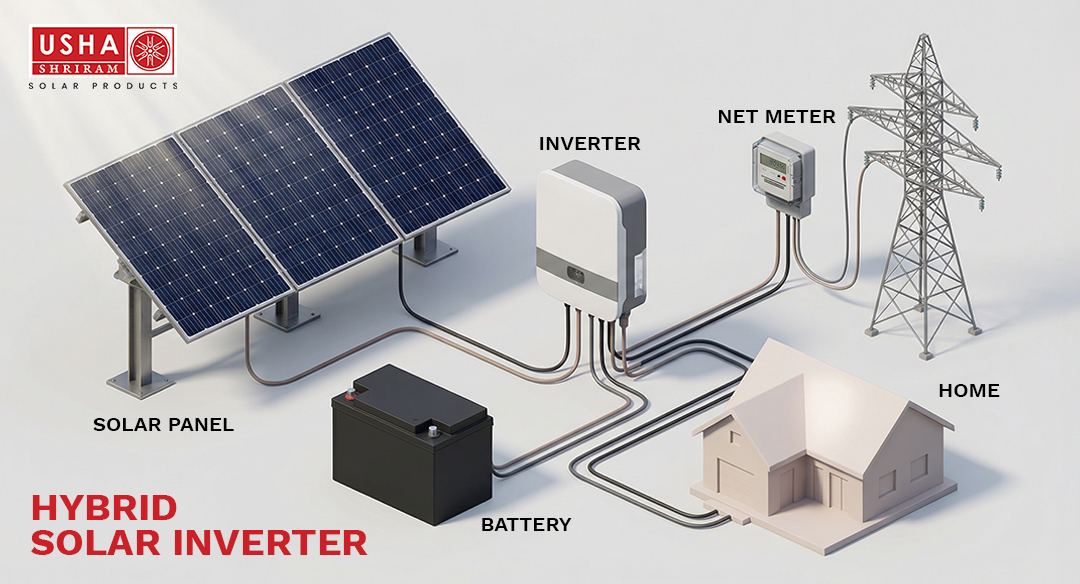
A hybrid solar inverter integrates three power sources – solar panels, battery storage, and grid electricity – into one seamless system.
Here’s how it differs from a normal inverter: Normal grid tie inverters will only function when the grid is present. They automatically turn off during power outages, leaving you in the dark even when your solar panels are producing electricity.
Off-grid inverters rely solely on solar energy and batteries. They function during power outages but cannot make use of grid power when it is available.
A hybrid solar inverter is a clever combination of all three power sources. During the daytime, it uses solar power first. Any surplus goes to charge the batteries. At night, it draws power from the batteries. As a final resort or backup, it taps into grid power when both solar and battery power are depleted.
This smart management system ensures that you are never left in the dark while keeping your electricity bills to a minimum. The system automatically changes modes depending on the availability of power and battery levels without requiring any human intervention.
How Does a Hybrid Solar Inverter Actually Work?
It is important to understand the working process to realize the impressive performance of the hybrid solar inverters.
Solar Power Conversion begins with the inverter’s process of changing DC electricity from solar panels to usable AC electricity. The MPPT charge controllers integrated into the inverter maximize energy from solar panels irrespective of sunlight intensity.
Smart Power Management determines where electricity goes based on programmed priorities. A typical priority sequence works like this: First, the inverter sends electricity directly to your home appliances. Second, if there is any extra energy, it is stored in the battery. Third, once the battery is fully charged, the excess power is sent to the grid, only if the system is connected to net metering. Fourth, when the solar panels are not generating enough power, energy is supplied from the battery. Fifth, grid electricity provides backup when both the solar panels and the battery cannot meet the demand.
This multi-source coordination happens automatically in milliseconds. You don’t touch any switches – the hybrid solar inverter handles everything based on real-time conditions.
Battery Charging and Protection is also an important feature. The inverter optimizes batteries for charging without overcharging or deep discharging. This extends the battery life considerably compared to the use of charge controllers.
A 5kW hybrid solar inverter is capable of handling medium-sized houses with air conditioners, refrigerators, lights, and other appliances. The 5kW power rating indicates that it can support a maximum of 5,000 watts of power at the same time.
Key Features Modern Hybrid Solar Inverters Offer
Today’s hybrid solar inverters pack advanced features that weren’t available even five years ago.
In-Built MPPT Technology provides 25-30% higher energy yield from solar panels than traditional PWM solar charge controllers. MPPT Technology automatically adapts to varying sunlight levels, cloud cover, and battery temperatures to always work at maximum efficiency.
Battery Compatibility supports both lithium-ion and lead-acid batteries. Lithium-ion batteries are more expensive but have a longer lifespan and require less maintenance. Lead-acid batteries are less expensive but require periodic maintenance and must be replaced every 3-5 years.
Remote System Monitoring via mobile apps enables you to monitor solar power output, battery performance, grid consumption, and system performance in real-time from anywhere. Some high-end hybrid solar inverters also enable you to modify system settings remotely.
Pure Sine Wave Output ensures that critical electronics such as computers, TVs, and air conditioners operate safely without damage. Low-cost modified sine wave inverters can damage high-end appliances over time.
Overload Protection safeguards against appliance damage when multiple appliances are used simultaneously. The inverter automatically disconnects non-essential appliances or switches to grid power to ensure system safety.
Smart Grid Connectivity in advanced hybrid solar inverters facilitates net metering, which allows surplus solar power to be fed back into the grid, generating credits that reduce your electricity bills further.
Benefits of Choosing Hybrid Solar Inverters
Why are hybrid solar inverters gaining so much popularity? The benefits are simply too good to ignore:
1. True Energy Independence – Store your excess solar energy in batteries and use it at night. The energy will keep flowing even during power outages. You won’t have to rely on the erratic power supply from the grid anymore.
2. Huge Cost Savings – Cut down your electricity bills by 50-70% depending on your solar energy capacity. With net metering, you can even cut down your bills to almost zero. A 5kW hybrid solar inverter system will pay for itself in 4-5 years through cost savings alone.
3. Flexibility to Use the Grid – Unlike traditional off-grid solar energy systems, you can use the grid energy when you want. This way, you won’t have to worry about undersized solar/battery systems that can’t handle prolonged periods of cloudy weather.
4. Scalable Solar Energy Solution – Begin with a hybrid solar inverter 3kW system and expand it with additional solar panels and batteries whenever you want. This way, solar energy will be within your reach without breaking the bank.
5. Environmental Impact – Reduce your carbon footprint substantially. A standard 5kW solar power system annually offsets the emission of 7-8 tons of CO2. This translates to stopping the emission of almost 200 tons of greenhouse gases in 25 years.
6. Seamless Backup Power – The transition of power is seamless. You won’t even notice it happening. Traditional inverters take seconds to change over, but hybrid solar inverters are like an online UPS system, which changes over in an instant.
7. Long Lifespan – Good hybrid solar inverters have a lifespan of 10-15 years with very little maintenance required. Solar panels continue to produce electricity for 25+ years. The cost of the system will serve you well for many years.
8. Smart Technology Integration – The AI-based optimization feature of the best hybrid solar inverters learns your usage patterns and changes the battery charging and discharging schedule accordingly.
Read More – TOPCon Solar Panel with Advanced N-Type Technology , Rooftop Solar Panel Subsidy in India
Hybrid Solar Inverter vs Traditional Inverters
How do hybrid solar inverters compare with traditional alternatives?
| Feature | Hybrid Solar Inverter | Traditional Inverter |
| Grid Use | Yes, with solar priority | Grid-only or solar-only |
| Battery Storage | Integrated management | Separate setup needed |
| Efficiency | 95-98% | 85-90% |
| Initial Cost | Higher upfront | Lower initial cost |
| Long-term Cost | Lower due to solar savings | Higher ongoing bills |
| Power Reliability | Multiple sources ensure power | Single source risks |
| Best For | All scenarios | Stable grids only |
The hybrid solar inverter wins for overall reliability and economics. While traditional inverters cost less initially, the 10kW hybrid solar inverter or smaller capacities deliver better long-term value through electricity savings and reliable backup power.
Making Your Solar Investment Count
Hybrid solar inverters represent the smartest approach to home solar systems. They combine grid reliability, solar savings, and battery backup into one intelligent package.
Whether you choose a hybrid solar inverter 3kW for modest needs, 5kW hybrid solar inverter for typical homes, or 10kW hybrid solar inverter for larger applications, the technology delivers impressive performance and savings.
For anyone serious about reducing electricity costs, gaining energy independence, and contributing to a cleaner energy future, hybrid solar inverters offer the complete solution combining best of all approaches without compromises of pure grid-tied or off-grid systems.
Stay updated with practical knowledge on solar energy, inverter technologies, and sustainable power solutions with insights from Usha Shriram Solar.
