Installing rooftop solar is no longer a trend in Indian homes; instead, it has become a solution that can bring long-term gains to households in terms of saving on electricity costs. As power costs rise and more support comes from the government, many houses are considering rooftop solar in 2026 than ever before.
However, before making this final step, most people have the following questions in mind: What is the cost of rooftop solar? Are there any subsidy benefits? When can I hope to get
back my money?
This blog explains everything in simple terms, from the price and subsidy of rooftop solar panels to their payback and yield, in order to make an informed decision.
What is Rooftop Solar System by Usha Shriram Solar?
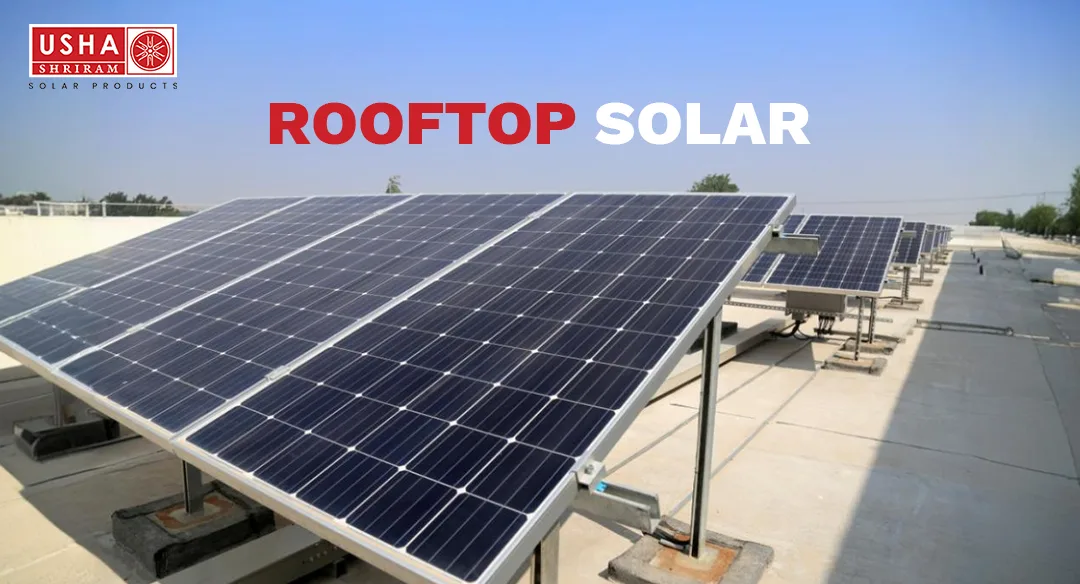
Rooftop solar is a solar power system installed on the roof of a house or any other building and is used for generating electricity directly from solar panels. The electricity is then utilized directly in the home without having to purchase electricity from other sources.
Most domestic homes employ rooftop solar power systems that are connected to the grid through net metering. This means:
- One uses solar power during the day.
- Additional electricity is sent back into the grid
- You earn credits which reduce your electricity expenses.
Eventually, rooftop solar helps individuals gain control over the cost of energy while reducing dependency on traditional sources of power.
Rooftop Solar Subsidy in India (2026) – Explained by Usha Shriram Solar

One of the principal reasons solar panels for roofs are now becoming an economically viable option is because of the subsidy offered by the government. In the year 2026, the central government continued its support for the PM Surya Ghar: Muft Bijli Yojana.
Central Government Subsidy (Residential)
For eligible homeowners, rooftop solar subsidy is provided in the following manner:
- ₹30,000 per kW for the first 2 kW
- ₹18,000 per kW for the next 1 kW
- Maximum subsidy up to ₹78,000
This subsidy acts as a direct reduction in the overall rooftop solar panel price, thus making the installment of solar panels easier for the middle class.
Besides the Central Government, some states in India offer additional incentives that can further reduce costs of Terrace Solar System.
👉 Check Your Solar Subsidy Eligibility with Usha Shriram Solar
Benefits of Rooftop Solar for Households

Rooftop solar panel installation does not only guarantee savings for the power bill; here are some real-life benefits for a homeowner:
Lower Monthly Electricity Bills
Once installed, Terrace Solar System can drastically reduce the electricity obtained from the grid. In most domestic contexts, grid electricity can be reduced by as much as 70-90%.
Protection from Rising Power Costs
Electricity rates rise every year. With rooftop solar, you are effectively locking in one of the biggest parts of your electric bill for the next 25 years.
Faster Solar Payback
For homeowners, subsidies and net metering provide significant relief; as a result, residential solar systems have a much shorter pay-back period.
Increase in Property Value
Houses with Terrace Solar System installation are often seen as more valuable because of lower running costs.
Clean and Sustainable Energy
Solar power helps to preserve a clean environment and reduce carbon emissions for future generation.
Rooftop Solar Installation Cost in India (2026)
The rooftop solar panel price depends mainly on system size, panel quality, inverter type, and installation standards.
Below is an approximate price range before subsidy:
- 1 kW system: ₹65,000 – ₹85,000
- 2 kW system: ₹1.2 – ₹1.5 lakh
- 3 kW system: ₹1.7 – ₹2.1 lakh
- 5 kW system: ₹3 – ₹3.5 lakh
After applying subsidies, the final rooftop solar panel price reduces significantly for residential users.
For example, a 3 kW rooftop solar system that costs ₹1.9 lakh may effectively cost much less after subsidy, improving affordability and solar payback.
👉 Get a Free Solar Cost Estimate from Usha Shriram Solar
Understanding Solar Payback Period and Solar ROI
The solar payback period is the time it takes for your savings on electricity bills to equal the total cost of the solar system.
In simple terms:
If your system costs ₹1.5 lakh and you save ₹25,000 per year on electricity, your solar payback period is around 6 years.
Most residential Terrace Solar System in India recover costs within 4–6 years, depending on:
- System size
- Electricity consumption
- Local sunlight conditions
- Subsidy received
Once this initial payback period ends, the electricity that your system will generate will be free for the remaining life of the panels (25+ years). “If you want to understand this in detail along with calculations and examples, refer to our guide on ‘How to Calculate Solar Payback Period’ to understand clearly to what extent you can earn from solar power.”
Why Choosing the Right Installer Matters?
While subsidies and pricing are important, rooftop solar’s performance is greatly determined by the system design and installation quality.
A well-installed system:
- Produces more energy
- Has fewer maintenance issues
- Achieves faster solar payback
That is where coming on board with a trusted solar partner plays an important role.
How Usha Shriram Solar Helps You Get Better Returns?

Usha Shriram Solar assists individuals at all stages of the rooftop solar system journey, from system size to subsidy availability and installation.
Their team ensures:
- Correcting the System Capacity based on Your Use
- Panels and inverters that suit Indian conditions
- Smooth net metering process
With the right planning, Usha Shriram Solar helps customers achieve faster solar payback and long-term peace of mind.
Conclusion
In 2026, one of the smartest investments for the residents of India is to consider rooftop solar power installation. This is due to the falling technology costs, the increasing government subsidies, and the rising power costs.
Knowing the rooftop solar panel price, available subsidies, and the solar payback helps you make an informed decision instead of guessing. If you’re considering going solar, this is the right time to get into the right deal with the right guidance to transform your roof into an asset that will save you money for years to come.
Ready to make your rooftop work for you? From system design to subsidy support and installation, Usha Shriram Solar helps you at every step of your solar journey.
👉 Talk to a Solar Expert at Usha Shriram Solar
Updated: January 2026
Subsidy details, pricing, and payback estimates are based on the latest available government guidelines and market trends.
