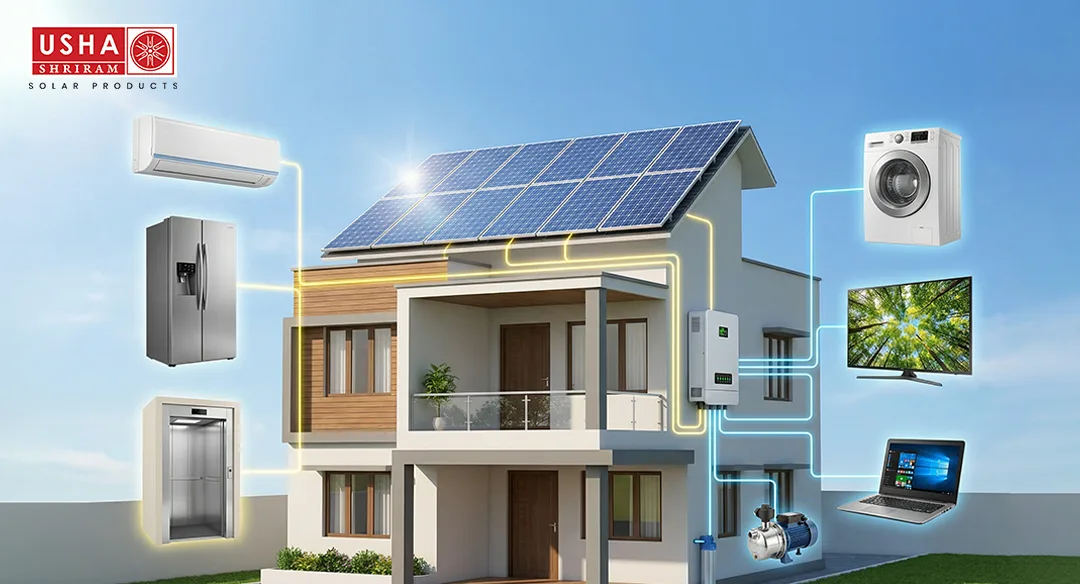
When considering a solar installation, a common and very common question asked by residents and business owners alike is whether or not solar can power your AC, a lift, a motor, and/or heavy machinery.
While many people think of electricity for lighting only, in general, air conditioners, elevators, pumps, and machines account for the largest proportion of electricity drawn from the electrical grid. Should solar power be capable of providing energy to these types of electrical loads, it can provide a massive potential for both savings and independence from conventional sources of energy.
In this article, we will cover whether your AC, lift, motor, or heavy-duty machinery can run on a solar system, the system required (standardized solar panel system for residences versus a large commercial solar electric system), and how solar works.
Can Solar Run an AC at Home?
The short and honest answer is — yes, Can Solar Run AC at home.
A modern solar rooftop system can easily run air conditioners, provided the system is designed properly.
Most home ACs consume between 1.2 kW to 2 kW of power per unit, depending on the star rating and usage. If your home has one or two ACs, a properly sized solar panel system for homes can support this load.
However, there is an important point to understand.
Solar panels generate power during the day. If you mostly use your AC during daytime, solar power can directly run your AC and reduce your grid electricity usage.
If you want to run AC at night using solar, then battery storage is required. Batteries store the extra solar power generated during the day and supply it later.
So, when people ask, Can Solar Run AC, the real answer depends on:
- how many ACs you use
- how many hours you run them
- whether you need backup through batteries
With the right system design, solar can easily support air conditioning for homes.
Can Solar Run a Lift in Residential or Commercial Buildings?
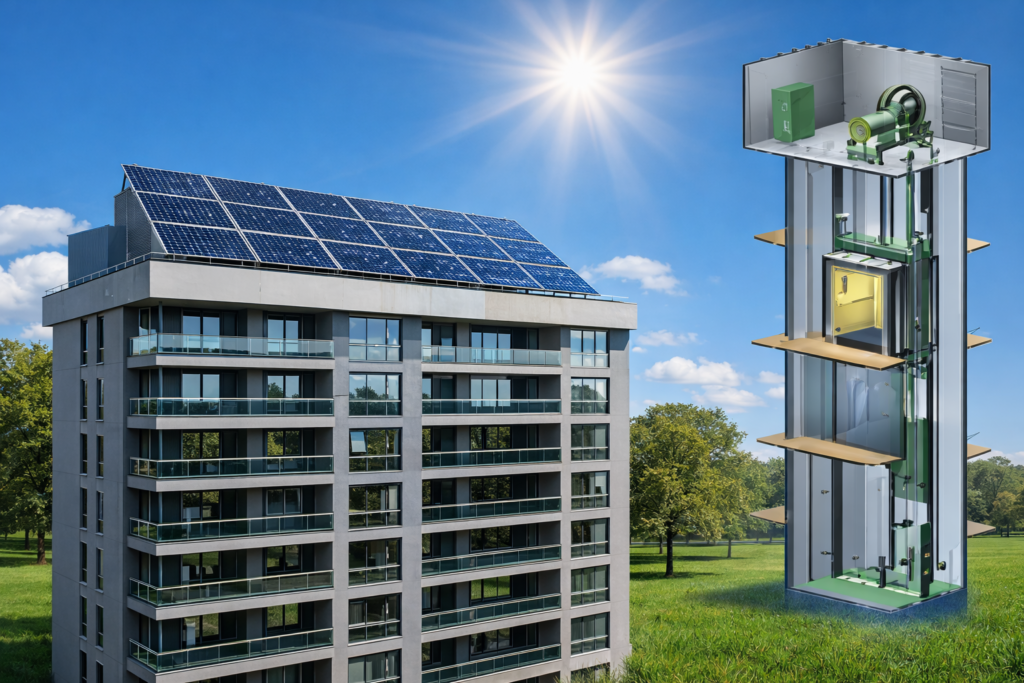
Another very common question today is — can solar run lift systems in buildings?
Yes, lift systems in both residential and commercial buildings can be powered by solar energy; however, the planning of the system will take a much different approach than would a conventional residential load.
Lifts require a high level of power, especially at start up due to what is known as surging or starting current. The electrical system must be able to handle this surge in load, even though the lift only operates for a brief time.
In most practical project applications, solar will complement the grid because it will:
- lessen the total amount of grid electricity consumed by the building
- provide supplemental power for the lift during the hours that solar is being produced
- reduce the amount of common area usage.
To have a reliable lift system using solar, the system will usually require:
- high-capacity inverters
- integrated electrical systems
- sometimes battery back up for critical applications.
Therefore, lift applications generally require an industrial solar power system versus a typical residential system.
So the answer to the question “Can solar run lifts?” is YES; however, only when the system has been engineered specifically to meet the requirements of lift applications.
Why Choosing the Right Inverter Matters
A solar panel system is only as good as the inverter that runs it. Things like air conditioners and lifts need inverters that can handle the power they use all the time and the extra power they need to start up. If you pick an inverter that’s too small or not very good you might get problems with the voltage going up and down and the system might shut down when you do not want it to. This can also make the system work well.
When you are putting in a panel system for your home or for a big industrial system you need to choose an inverter that is the right size. This is very important if you want the system to work safely and without stopping all the time. Solar panel systems, like these need an inverter to work properly.
Can Solar Run Motors and Heavy Machines?
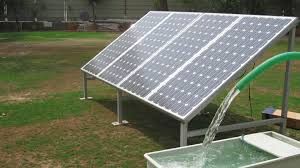
This is one of the most important questions for factories and industrial units.
Yes, solar can run motors and heavy machines. Today, many manufacturing plants operate their equipment using solar during working hours.
However, this requires a properly designed industrial solar power system.
Motors used in factories, water pumping systems, compressors and production machines consume large amounts of power. Just like lifts, motors also require high starting current.
In industrial projects, solar power is normally connected to the main electrical panel of the plant. During the daytime, solar power directly supplies part of the total load, including motors and machinery.
In such setups:
- machines do not directly depend only on solar
- the grid and solar work together
- solar reduces the amount of electricity drawn from the grid
For businesses, this model is more stable and cost-effective.
This is why industrial users choose large rooftop or ground-mounted solar plants instead of normal solar panel system for homes.
So, whether it is CNC machines, packaging lines, air compressors or processing equipment, solar can support these loads when an industrial-grade design is used.
What Decides Whether Solar Can Run These Loads?
Now that we know Can Solar Run AC, can solar run lift, and heavy machines, let us understand what actually decides the success of a solar project.
1. Total connected load
The first factor is how much power your equipment consumes.
A house with one AC is very different from a commercial building with multiple lifts or a factory running motors. The total load decides the size of the solar system.
2. Type of application – home or industrial
For homes, a standard solar panel system for homes is usually enough.
For factories and commercial buildings, a much larger and more robust industrial solar power system is required.
3. Operating time of the equipment
If you operate predominantly on solar energy during the day, it is a good choice to set up solar power. However, if you primarily operate at night, you’ll need to invest in either battery storage or hybrid systems.
4. Starting current of machines
Motors and lifts require specialized inverters due to their high starting load capacities as the typical residential inverter won’t have that capability.
5. Electrical infrastructure of the site
If your wiring is outdated, too small, or poorly grounded, you won’t be able to utilize all of the solar-generated power.
6. System design and engineering
Engineering is the most important aspect of the installation of solar equipment; two solar installations of equal size can be designed and perform differently based on the design of the installation.
At Usha Shriram Solar, the focus is always on understanding the real operating conditions of the site. Instead of offering a generic system, the team studies:
- equipment load profiles
- operating schedules
- power quality requirements
- future expansion needs
This practical design approach helps ensure that ACs, lifts and machines actually work smoothly on solar without unexpected shutdowns or power quality issues.
Conclusion
So, the answer to the main question is clear.
Yes – solar can power air conditioners, elevators, motors, and even heavy machinery.
Yes – solar can provide power to elevate buildings for residential and commercial purposes.
Yes – factories can use solar energy to drive motors and industrial equipment while the factory is operating.
However, what defines success is if the solar system is properly sized. Typically, residential homes require appropriately sized solar systems.
Commercial and industrial properties require professionally engineered solar power systems.
At Usha Shriram Solar, customers are supported from system planning to execution with one clear objective — making sure the solar plant works reliably with real-world electrical loads, not just on paper.
👉 If you are planning solar for ACs, lifts or industrial machines, speak to an expert at Usha Shriram Solar and get a load-based solar design that fits your actual power needs.
How much solar panel is required for lift?
The exact solar capacity depends on the lift motor size, number of lifts, usage hours and building load. A professional site assessment is required to calculate the correct system size.
Is a 90% efficient solar panel possible?
No. Today’s commercial solar panels have efficiencies generally between 20% and 23%. A 90% efficient solar panel is not technically possible with current photovoltaic technology.
Can solar run AC without batteries?
Yes. Solar can run AC during the daytime without batteries. Batteries are required only if you want to operate AC during night hours using stored solar energy.
Can an industrial solar power system run all factory machines?
An industrial solar power system can support a large portion of factory loads during operating hours. However, most plants use a grid-connected system where solar and grid power work together for stability.
