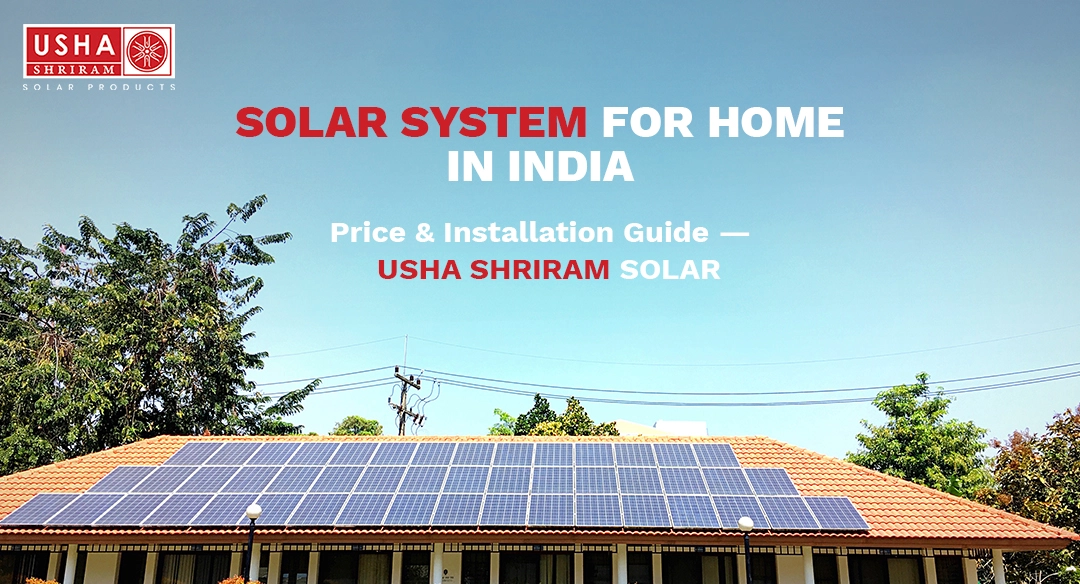
Electricity bills keep climbing every month. Power cuts disrupting your daily routine? You’re not alone. Thousands of Indian homeowners are now looking at rooftops differently – not just as shelter, but as potential power generators. That’s where a solar system for home changes everything.
Going solar isn’t some futuristic dream anymore. It’s a practical decision families across India are making right now. The technology has matured, prices have dropped significantly, and government subsidies make it more accessible than ever. But here’s the catch – there’s a lot of confusing information out there. Some talk about panels, others mention complete systems. What’s the difference? What do you actually need?
This guide cuts through the confusion. Whether you’re in Mumbai, dealing with space constraints, or in Punjab with acres of rooftop, understanding solar basics helps you make smart choices that pay off for decades.
What Exactly is a Solar System?
A solar system (photovoltaic system) converts sunlight into electricity for your home. It’s not just panels on your roof – it’s a complete setup, including solar panels, an inverter, mounting structures, cables, and safety equipment working together to generate clean electricity. The basic principle is simple: solar panels capture sunlight, convert it to DC electricity, the inverter changes DC to AC electricity that your home appliances use, and you consume this self-generated power instead of drawing from the grid. Any excess electricity can be fed back to the grid, earning you credits through net metering.
What Does a Solar System for Home Include?
Understanding components helps you know what you’re actually investing in when installing a solar system for home.
Solar Panels – These panels sit on your rooftop and capture sunlight to generate power. The number of panels depends on the system capacity, not a fixed count. For example, a 3 kW system typically requires around 6 panels, while a 5 kW system may need around 10 panels. Choosing high-quality panels ensures consistent and reliable electricity generation for 25+ years.
Solar Inverter – Converts DC electricity from panels into AC electricity your home uses. Solar Inverter quality has a direct impact on system efficiency and reliability. Options include string inverters, micro-inverters, or hybrid inverters with battery backup capability.
Mounting Structure – Aluminum or galvanized iron structures securely holding panels on your roof. Must withstand monsoon winds and storms for decades.
Cables and Connectors – Quality DC cables connecting panels to the inverter, AC cables from the inverter to your home’s electrical system. Proper gauge cables prevent power losses.
Safety Equipment – Circuit breakers, earthing, surge protection, and disconnect switches ensure safe operation and protection from electrical hazards.
Net Meter – Bidirectional meter tracking electricity you consume from the grid and electricity you export back. Essential for net metering benefits.
Battery Storage (Optional) – Some solar systems for home installations include batteries storing excess electricity for use during evenings or power cuts. Increases cost but provides energy independence.
Solar System vs Solar Panel: Understanding Key Differences
Many people confuse “solar panels” with “solar system.” Let’s clarify:
Solar Panels for Home refer specifically to the panels themselves – the blue or black rectangles generating electricity from sunlight. When you buy solar panels for home, you’re purchasing just one component.
Solar System for Home means the complete installation – panels, inverter, mounting, cables, safety equipment, installation, and commissioning. It’s the turnkey solution delivering electricity. Here’s a comparison table:
| Aspect | Solar Panels Only | Complete Solar System |
| Functionality | Generates DC power only | Generates and converts to usable AC power |
| Components | Just the panels | Panels, inverter, mounting, wiring, monitoring |
| Installation | Needs additional equipment | Ready-to-use power solution |
| Cost | Lower upfront | Higher initial investment |
| Usability | Can’t power home directly | Power appliances immediately |
When people search for “best solar panel for home,” they usually mean the best complete system. Panels are important, but they’re just one piece of the puzzle.
Solar System Installation for Home: What Actually Happens
Getting a solar panel setup for home installed is way less disruptive than most people fear. Here’s the real process:
Site Visit comes first. Technicians show up, measure your roof, check if the structure can handle the weight, look at sun exposure and any shading from trees or buildings, review your electricity bills, and figure out what size system makes sense.
Design and Quote follow the assessment. You get a detailed proposal showing system size, how much power it’ll generate, a complete solar panel for home price breakdown, when it’ll pay for itself, and projected savings over 25 years.
Paperwork happens next. For grid-connected systems, you need electricity board approvals. Good installers handle this bureaucracy. Government subsidies have their own documentation requirements, too.
Installation Day typically takes 2-3 days for homes. Teams install mounting structures first, secure the panels, run all the wiring, connect the inverter, hook everything into your electrical panel, and then test it thoroughly.
Inspection comes before final connection. For grid-tied setups, electricity boards inspect and approve before connecting to the grid. This enables net metering, where extra power flows back, cutting bills even more.
Monitoring Setup wraps things up. Modern systems need barely any maintenance – cleaning panels maybe 3-4 times a year and annual checkups. Apps alert you immediately if anything’s not performing right.
Professional solar system installation for the home ensures safety, optimal performance, and keeps warranties valid. DIY attempts might look cheaper but risk electrical problems, void warranties, and often disappoint with actual results.
Understanding Solar Panel for Home Price in 2025
Pricing is generally based on system size, component quality, and where you live. Here are several factors that drive costs:
System Size: Sizes are measured in kilowatts (kW). Obviously, a 3kW system costs less than 5kW. Most homes need somewhere between 3 and 5kW.
Panel Quality: Premium panels with better efficiency and real warranties cost more upfront but pay off long-term.
Inverter Choice: Types of inverters affect prices too. String inverters are economical. Micro-inverters cost extra but work better when shade hits parts of your roof.
Installation Complexity: Tough roof access, long wiring runs, or needing structural reinforcement all add to the bill.
Location: Searching “solar system near me” shows costs vary by region. Transportation, local labor rates, and competition affect what you’ll pay.
Ballpark figures: expect ₹50,000-70,000 per kW for quality on-grid systems. A typical 5kW setup might run ₹2.5-3.5 lakhs before subsidies. Government subsidies can knock off ₹30,000-50,000, depending on your state and system size.
Calculate payback by dividing total cost by the yearly electricity savings. Most systems pay themselves off in 4-6 years, then generate free power for another 20+ years.
Why Choose Usha Shriram Solar
When investing in a solar system for the home, the manufacturer and installer matter as much as the technology. Usha Shriram Solar brings decades of electrical expertise to solar solutions.
The panels come with MNRE-approved certification and a 25-year warranty – one of the best in India. This isn’t just a paper warranty; it’s backed by an established company with nationwide service presence. Many solar startups disappear within years, leaving customers with worthless warranties.
Usha Shriram focuses on quality components throughout the system. Premium panels maintain high efficiency decades later. Reliable inverters minimize failures and power loss. Robust mounting withstands harsh Indian weather from coastal humidity to desert heat.
The installation network spans across India. Whether searching “solar system near me” in Bangalore or Jaipur, professional installation and after-sales support remain accessible. This matters enormously for a 25-year investment.
Post-installation support includes monitoring assistance, maintenance guidance, and quick response to any issues. You’re not left figuring things out alone after installation crews leave.
Conclusion
Switching to a solar system for home represents one of the smartest investments Indian homeowners can make in 2025. Technology has matured, costs have dropped, and the environmental and financial benefits are undeniable.
Whether concerned about rising electricity costs, frequent power cuts, or reducing your carbon footprint, solar delivers tangible solutions. The key lies in choosing quality components, professional installation, and reliable manufacturers backing their products long-term.
Focus on value – quality panels with genuine warranties, complete system design, and post-installation support. The difference between a good system and a problematic one shows up over 25 years of operation. Ready to harness free energy from your rooftop? Contact Usha Shriram Solar today!
