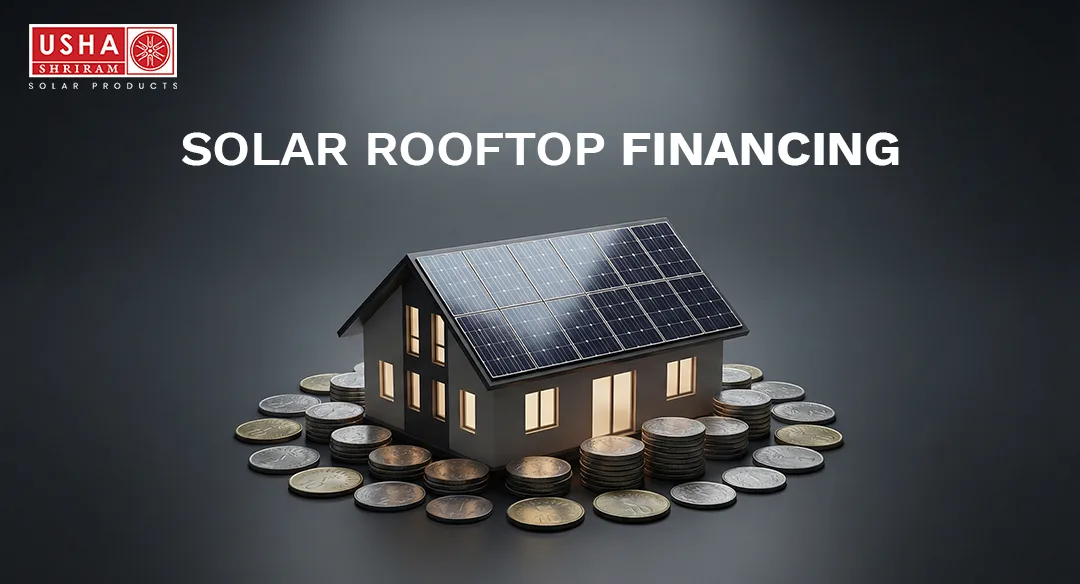
Rooftop solar seems like a smart decision: lower electricity bills, use green energy, and save money in the long run. However, most homeowners are stuck right here when it comes to making the decision to go solar. The question is “How do I pay for this?”
This is where Solar Rooftop Financing comes into play.
In 2026 solar systems will no longer be just for those who can afford to pay cash up front. With numerous loan options available, growing support from banks, and help from the government, solar has become cheaper than ever to install. In this blog we’re going to walk through how simple loans work, how banks can support you, and how government subsidies can lower your costs so that you can make a decision without confusion.
What Is Solar Panel Loan in India?
An Indian solar panel loan provides financing options for purchasing a rooftop solar system over a period of time (in the form of monthly repayments). These loans are offered by banks, NBFCs (non-bank lenders), and specialised finance firms.
A good way to think about a solar panel loan is as a “home loan” – you borrow money to purchase the system, and then repay the loan with the principal and interest. The most significant advantage of the solar panel loan is that the monthly EMIs are typically much less than your current electricity bill, so converting to solar will not place an undue burden on your finances.
Solar loans can be used for both rooftop solar panels and related equipment and will generally be available as either a stand-alone loan or combined with other loans (e.g., home improvement) for greater flexibility in your borrowing options.
How Does Solar Rooftop Financing Work for Homeowners?
The process of understanding solar financing can make it seem less overwhelming. Here are the steps:
Step 1 – Request a Solar Quote
- You must obtain a solar quote with the actual costs of the system, capacity and other installation details from an MNRE approved vendor.
Step 2 – Select Your Financing Option
- Speak with a banker or finance company in India regarding a solar loan.
- You’ll need to share basic details like your income, credit score, electricity bills, and ownership proof of your home.
Step 3 – Apply for the Loan
- After you submit your loan application to the bank; the bank will determine if you meet the requirements for the loan.
Step 4 – Installation
- The solar vendor will install your solar panel system according to the agreed plan.
Step 5 – Pay Off Your Loan
- You will begin to pay off your loan through monthly loan payments over a number of months or years.
- The savings from your monthly electricity bills should be helpful in repaying your loan.
Step 6 – Claim Your Subsidy
- You or the bank can claim a solar subsidy for home in India from the government, which gets credited either directly to your account or to your loan account.
By spreading the cost over time and using subsidies, solar financing becomes affordable and predictable.
Best Bank for Solar Loan in India – What to Look For
Which is the best bank for a solar loan in India? is one of the frequently asked questions today. The truth is, there is not one best answer for everyone, as the right bank for you will depend on your circumstances.
When comparing potential lenders, you should consider:
- Interest Rate – Lower interest rates equal lower monthly payments
- Loan tenure – A longer loan term means lower monthly payment amounts
- Processing Time – The sooner you receive your loan approval, the quicker you will be able to install your solar panel system
- Experience with Solar Loans – Banks with experience in solar projects will typically provide better service than others.
Most national and many private banks are now actively supporting solar, Some also offer green energy loans under special schemes. It is much easier to narrow down your lender search when your solar partner already works with multiple lenders.
This is why choosing a trusted installer is important, Usha Shriram Solar wants to make this process as easy as possible for homeowners to find safe, transparent, affordable financing options for installing their solar panel systems instead of using high-pressure tactics to try to sell you a system.
Solar Subsidy for Home in India
Subsidies provided by the government are a major factor in the growth of rooftop solar installations. You can reduce your upfront cost significantly by claiming a solar subsidy for home in India.
The PM Surya Ghar: Muft Bijili Yojana (PM Solar Home: Free Electricity Scheme) provides a subsidy to eligible homeowners based on the size of their solar systems. Subsidy amounts typically range from ₹18,000 per kW of installed capacity to ₹78,000 for a 3 kW system.
How to Claim the Subsidy:
- Register on the National Rooftop Solar Portal
- Find an approved vendor as listed by the Ministry of New and Renewable Energy
- Install the solar system
- Submit copies of documents to support your subsidy claim
- Your subsidy will be deposited into your bank account or directly credited to the loan account.
The subsidy will lower your net cost and increase the return on investment for your new solar energy system.
do you want know ? – State Wise Solar Subsidies in India
Conclusion
The average person in India can now afford a solar system on their roof. The cost of installation can be paid over time through solar rooftop loans, and you will benefit from savings immediately. In addition to loan financing, many Government subsidies are available that further reduce the total cost of switching to clean energy using solar power.
When choosing the best bank for solar loans in India, you should consider several factors including interest rates, time to pay back and whether or not the bank integrates subsidies/funding into the loan. Usha Shriram Solar is a trusted solar panel supplier that works with an authorised network of distributors and channel partners who provide the installation services for solar rooftop systems.
👉 Take the first step towards affordable, clean energy — contact Usha Shriram Solar now and power your future with confidence.
What is the payback period for rooftop solar?
For most Indian homes, the payback period is between 4 to 6 years, depending on system size, electricity usage, and subsidy benefits.
Is a solar panel loan in India better than a personal loan?
Yes. A solar panel loan in India usually has lower interest rates and longer tenures compared to personal loans, making it more affordable.
Can I get both a solar loan and subsidy together?
Yes. You can combine Solar Rooftop Financing with government subsidy benefits, which reduces the total loan amount and lowers EMIs.
Yes. You can combine Solar Rooftop Financing with government subsidy benefits, which reduces the total loan amount and lowers EMIs.
Compare interest rates, loan tenure, approval time, and experience with solar projects. Working with an installer like Usha Shriram Solar makes this choice easier.
