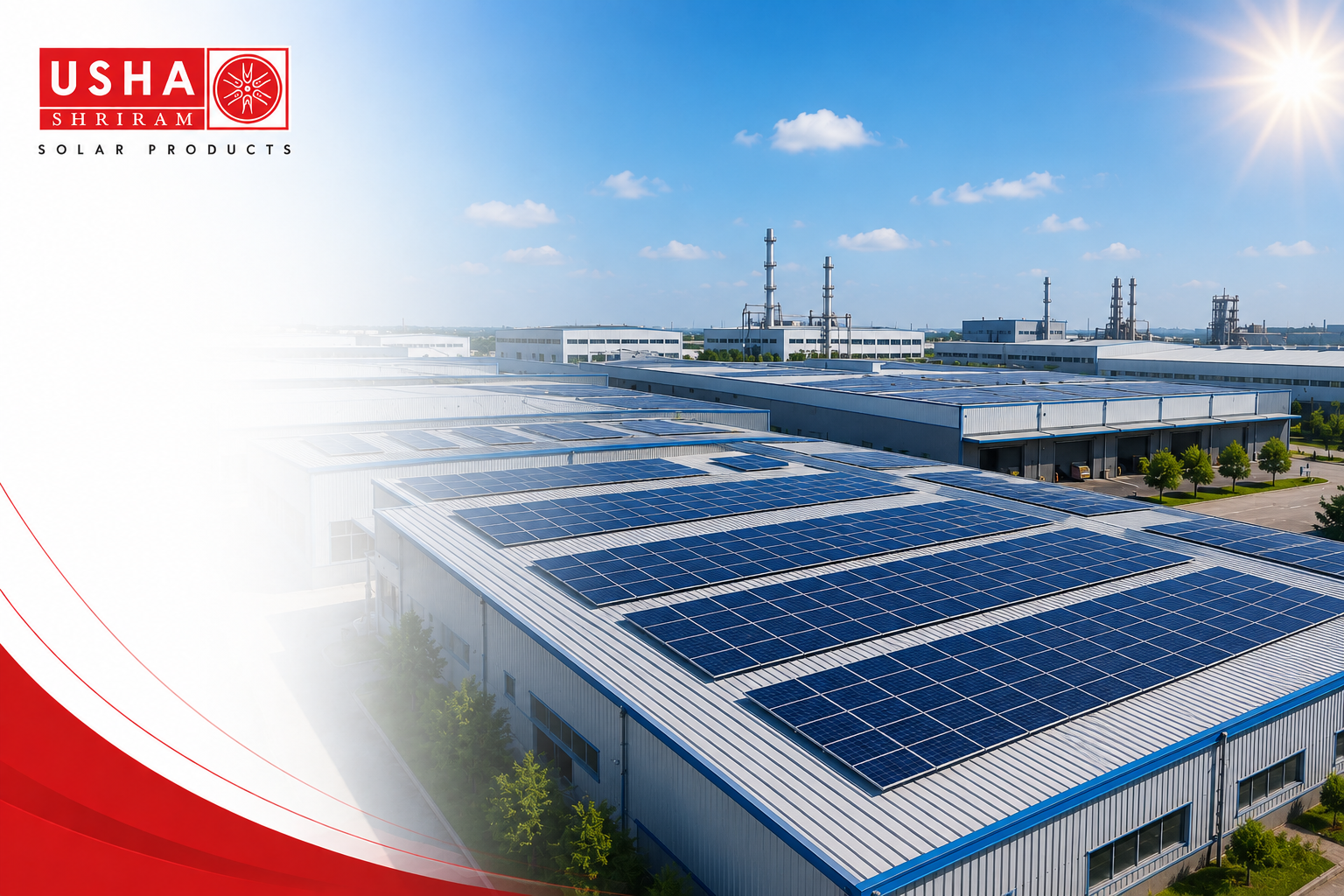
Industrial Solar Solutions for Factories & Warehouses
Electricity is no longer just another operational expense for industries—it has become one of the biggest factors affecting profitability, production costs, and long-term business growth. Whether you operate a manufacturing unit, textile mill, pharmaceutical plant, automobile factory, food processing facility, warehouse, logistics hub, or industrial park, rising electricity tariffs directly impact your bottom line.
Across India, industries are witnessing continuous increases in power costs due to fuel price fluctuations, transmission charges, demand charges, and changing electricity regulations. For businesses operating 24×7, even a small increase in electricity tariffs can translate into lakhs or crores of additional annual expenses.
This is why forward-thinking businesses are rapidly adopting Industrial Solar Solutions.
Instead of depending entirely on grid electricity, industries are investing in large-scale solar power plants that generate clean electricity directly at their facilities. These systems not only reduce electricity bills significantly but also provide predictable energy costs for the next 25 years.
Industrial solar is no longer viewed as an environmental initiative—it has become a strategic financial investment. Companies that install industrial solar systems today gain a competitive advantage by lowering production costs, improving operational efficiency, strengthening sustainability commitments, and protecting themselves against future energy price hikes.
At Usha Solar, we specialise in delivering turnkey industrial solar solutions for factories, warehouses, industrial parks, manufacturing plants, logistics centres, commercial campuses, and large enterprises across India. From initial consultation and engineering to installation, commissioning, maintenance, and long-term support, our experienced team manages every stage of your solar project with precision and quality.
Whether you require a 250 kW rooftop solar plant, a 500 kW industrial solar plant, a 1 MW ground-mounted solar project, or a customised Power Purchase Agreement (PPA) solution, Usha Solar helps your business transition to reliable, cost-effective and sustainable energy.
Why Industrial Solar Power Plants Are Growing in India
India is rapidly becoming a global manufacturing hub through initiatives such as Make in India, industrial corridor developments, and increasing foreign investments. While production capacity continues to expand, one challenge remains common across almost every industrial sector—high electricity costs.
Power-intensive industries often spend a significant percentage of their operational budget on electricity. Manufacturing processes, heavy machinery, HVAC systems, lighting, compressors, refrigeration, automation systems, and production lines require uninterrupted power throughout the day.
Traditional electricity sources expose industries to several challenges:
• Rising commercial electricity tariffs
• Dependence on state electricity boards
• Unexpected power outages
• Increasing diesel generator costs
• Demand charges during peak usage
• Environmental compliance requirements
• Carbon emission reduction targets
• Pressure from international buyers for sustainable manufacturing
Industrial solar addresses these challenges by enabling businesses to generate their own electricity using sunlight—one of India’s most abundant natural resources.
Unlike conventional power sources, solar energy offers long-term price stability. Once your solar plant is installed, the cost of generating electricity remains relatively stable for decades, helping businesses forecast operational expenses more accurately.
For industries with large rooftops or available land, solar energy transforms unused space into a valuable income-generating asset that continuously offsets electricity bills.
What is an Industrial Solar Power Plant?
An industrial solar power plant is a large-scale photovoltaic (PV) system specifically designed to meet the electricity requirements of factories, warehouses, industrial campuses, and commercial facilities.
Unlike residential solar systems that typically range from 2kW to 20kW, industrial solar projects generally begin at 100 kW and can extend to several megawatts depending on energy consumption and available installation area.
These systems consist of interconnected solar panels, inverters, mounting structures, electrical protection systems, transformers (where required), monitoring software, and distribution equipment that work together to convert sunlight into usable electricity for industrial operations.
The generated electricity can be used in several ways:
• Direct consumption within the factory
• Export to the grid (subject to applicable regulations)
• Net metering or gross metering (where available)
• Captive power generation
• Group captive arrangements
• Open access solar projects
• Hybrid energy systems combined with battery storage
Industrial solar plants are engineered to maximise energy generation while ensuring reliability, safety, and long-term performance.
Why More Industries Are Switching to Solar Energy
The adoption of industrial solar has accelerated significantly over the last decade because it delivers measurable business benefits beyond environmental sustainability.
1. Significant Reduction in Electricity Costs
Electricity often represents one of the highest recurring operational expenses for industrial businesses. By generating power onsite, companies can reduce dependence on expensive grid electricity and lower their monthly electricity bills substantially.
Over the lifespan of a solar plant, these savings can amount to several crores of rupees depending on system size and energy consumption.
2. Protection Against Rising Electricity Tariffs
Commercial electricity prices rarely decrease. Every year, industries face revised tariffs, fuel adjustment charges, and additional levies.
Solar energy protects businesses from these unpredictable increases by providing a stable source of electricity at a much lower lifetime cost.
3. Better Business Profitability
Reducing operational costs directly improves profit margins.
Lower electricity expenses mean businesses can:
• Increase production efficiency
• Offer competitive pricing
• Improve profitability
• Reinvest savings into expansion
• Strengthen financial stability
For manufacturing industries operating in highly competitive markets, every reduction in production cost creates a meaningful advantage.
4. Improved ESG Performance
Environmental, Social, and Governance (ESG) reporting has become increasingly important for businesses worldwide.
Many multinational corporations now prefer suppliers that actively reduce carbon emissions through renewable energy adoption.
Installing industrial solar demonstrates a company’s commitment to sustainability while supporting long-term environmental goals.
5. Enhanced Energy Security
Industrial operations cannot afford frequent power interruptions.
Solar systems reduce reliance on external electricity supply and improve operational resilience, especially when integrated with backup power systems or energy storage solutions.
6. Excellent Long-Term Investment
Unlike many capital investments that depreciate quickly, industrial solar plants continue generating value for decades.
Modern high-quality solar modules typically carry performance warranties, making solar one of the most reliable long-term investments available for industrial businesses.
Industries That Benefit Most from Industrial Solar
Almost every industry with significant daytime electricity consumption can benefit from industrial solar installations.
Manufacturing Industries
Manufacturing plants consume large amounts of electricity through machinery, automation systems, conveyors, compressors, motors, furnaces, and production lines.
Solar power helps manufacturers reduce production costs while improving energy efficiency.
Warehouses & Logistics Centres
Modern warehouses usually feature expansive rooftops that remain unused throughout the year.
These large roof areas provide ideal conditions for installing industrial rooftop solar systems capable of generating substantial amounts of clean electricity.
As logistics operations continue expanding across India, warehouse owners are increasingly investing in solar to reduce operational expenses.
Textile Industries
The textile sector is one of India’s largest electricity consumers.
Processes such as spinning, weaving, dyeing, finishing, and garment manufacturing require continuous power.
Industrial solar helps textile manufacturers improve competitiveness by lowering electricity costs without compromising production quality.
Food Processing Units
Food processing plants rely heavily on refrigeration systems, automated machinery, packaging equipment, lighting, and temperature-controlled environments.
Solar energy supports continuous operations while reducing monthly electricity expenditure.
Pharmaceutical Manufacturing
Pharmaceutical companies require highly reliable power for precision manufacturing, laboratory operations, clean rooms, and climate-controlled production environments.
Solar power complements these facilities by reducing operating costs while supporting sustainability objectives.
Automobile Manufacturing
Vehicle manufacturing facilities consume enormous amounts of electricity across robotic assembly lines, welding systems, painting units, testing facilities, and quality control operations.
Large rooftop and ground-mounted solar installations provide significant cost savings for automotive manufacturers.
Steel, Cement & Heavy Engineering
Heavy industries typically have substantial energy requirements and extensive land availability.
Ground-mounted industrial solar plants help offset electricity demand and improve operational economics over the long term.
Cold Storage Facilities
Cold storage businesses operate refrigeration systems around the clock, making electricity one of their highest expenses.
Solar energy significantly reduces operational costs while supporting uninterrupted cooling operations.
Industrial Parks & SEZs
Industrial parks housing multiple manufacturing units can develop centralised solar power systems to provide clean energy across the entire campus.
Such projects improve overall energy efficiency while enhancing the sustainability profile of the industrial zone.
Is Your Factory Suitable for a 250 kW or Larger Solar Plant?
Many business owners assume solar is only suitable for companies with massive land parcels. In reality, several factors determine whether your facility is ideal for an industrial solar installation.
Your factory may be an excellent candidate if you have:
• High monthly electricity bills
• Large roof space or open land
• Significant daytime power consumption
• Stable year-round operations
• Expansion plans over the next 10–20 years
• A commitment to reducing operating costs
• Sustainability or ESG objectives
• Long-term ownership of the facility
A detailed site assessment conducted by experienced solar engineers helps determine the ideal system capacity, expected energy generation, structural requirements, and projected financial savings.
At Usha Solar, every industrial project begins with a comprehensive technical and financial feasibility study to ensure maximum return on investment and long-term performance.
500 kW and Above Industrial Solar Power Plants:
Building a Future-Ready Energy Infrastructure – As industries continue to expand their manufacturing capacity, electricity demand increases proportionally. Modern production facilities operate sophisticated machinery, automated assembly lines, HVAC systems, material handling equipment, compressors, refrigeration units, and quality control systems that require uninterrupted power throughout the day. For businesses with such high energy consumption, installing a 500 kW or larger industrial solar power plant is no longer simply an environmental initiative—it has become a strategic investment that directly improves profitability.
A 500 kW solar power plant generates a substantial amount of electricity annually, helping industries offset a significant portion of their grid dependency. However, determining the right system size involves much more than selecting a capacity. Every industrial facility has a unique energy profile based on production schedules, connected load, seasonal demand, operational hours, and future expansion plans. This is why every successful industrial solar project begins with a comprehensive technical and financial assessment rather than a one-size-fits-all solution.
At Usha Solar, our engineering team carefully evaluates your facility’s monthly electricity consumption, sanctioned load, maximum demand, transformer capacity, available rooftop or land area, and future growth objectives before recommending an appropriate solar capacity. This customised approach ensures that the solar plant delivers maximum financial returns while maintaining operational reliability.
For many factories, a 500 kW solar installation serves as the ideal starting point because it provides significant energy generation without requiring excessive infrastructure changes. As electricity demand grows, the system can often be expanded into multi-megawatt installations through modular design principles. This scalability makes industrial solar a future-ready investment that evolves alongside your business.
Unlike conventional power infrastructure that continuously incurs increasing operational costs, a solar plant converts sunlight into electricity every day without fuel expenses. Once installed, it becomes a productive business asset capable of generating savings for more than two decades. This long operational life is one of the primary reasons why industrial solar consistently delivers an attractive return on investment.
Planning a 500 kW+ Industrial Solar Project
Developing a large-scale solar project involves detailed planning and engineering. The objective is not merely to install solar panels but to create an efficient energy generation system that integrates seamlessly with existing industrial operations.
The first stage involves studying historical electricity consumption. Engineers examine monthly electricity bills to understand daytime demand, peak consumption patterns, seasonal fluctuations, and production cycles. This analysis helps determine how much of the facility’s electricity requirement can realistically be met through solar generation.
The next step is evaluating the installation site. If rooftop solar is being considered, engineers assess roof dimensions, structural integrity, load-bearing capacity, waterproofing conditions, and potential shading from nearby structures. For ground-mounted installations, factors such as soil conditions, topography, drainage, accessibility, and future land utilisation are carefully analysed.
Another critical consideration is the electrical infrastructure already present within the facility. Existing transformers, switchgear, distribution panels, and protection systems must be compatible with the proposed solar installation. Proper integration ensures that the solar plant operates safely without disrupting manufacturing activities.
Future expansion is equally important. Many industries anticipate production growth over the next decade, making it essential to design a solar system that can accommodate additional capacity without requiring significant redesign or reconstruction.
By combining these technical assessments with financial analysis, Usha Solar develops industrial solar solutions that maximise both energy generation and long-term business value.
Rooftop vs Ground-Mounted Industrial Solar: Which Option is Right for Your Business?
One of the most important decisions during project planning is selecting the installation type. Most industrial solar projects are installed either on factory rooftops or on dedicated land using ground-mounted structures. Both approaches provide excellent long-term benefits, but the right choice depends on the available space, operational requirements, budget, expansion plans, and site conditions.
Industrial rooftops have become increasingly popular because they transform unused roof space into productive energy-generating assets. Manufacturing units, logistics parks, warehouses, and commercial buildings often possess thousands of square meters of roof area that remain underutilised throughout the year. Installing solar panels on these roofs allows businesses to generate electricity without acquiring additional land.
Ground-mounted systems, on the other hand, are preferred when industries have vacant land available within or near their premises. Since these systems are installed directly on engineered support structures, they provide greater flexibility in panel orientation, spacing, maintenance access, and future expansion.
Rather than viewing one option as universally superior, the choice should always be based on the specific operational needs of the business. An experienced EPC partner evaluates both possibilities before recommending the most suitable solution.
Rooftop vs Ground-Mounted Industrial Solar Comparison
| Feature | Rooftop Industrial Solar | Ground-Mounted Industrial Solar |
| Installation Location | Factory roofs, warehouses, industrial sheds | Open land within or near industrial premises |
| Land Requirement | No additional land required | Requires dedicated land area |
| Installation Cost | Generally lower due to existing structure | Higher because of civil and structural work |
| Maintenance Access | Moderate depending on roof layout | Easier access for maintenance teams |
| Expansion Flexibility | Limited by available roof space | Highly scalable for future capacity additions |
| Cooling Efficiency | Slightly affected by roof heat | Better airflow improves module efficiency |
| Suitable For | Warehouses, factories, logistics hubs | Large manufacturing campuses and industrial parks |
| Future Expansion | Limited | Excellent |
Advantages of Industrial Rooftop Solar
For industries with large roof areas, rooftop solar offers an excellent balance between cost efficiency and energy generation. Since the building itself provides the installation platform, businesses avoid the expense of purchasing additional land. This significantly improves project economics, especially in urban industrial zones where land costs are high.
Another important advantage is that rooftop solar utilises otherwise idle infrastructure. Instead of allowing thousands of square feet of roof space to remain unused, businesses convert these surfaces into productive assets that generate electricity every day.
Warehouses are particularly well suited for rooftop solar because they generally feature wide-span steel structures with minimal shading. Logistics companies, e-commerce fulfilment centres, FMCG distribution hubs, and cold storage facilities increasingly rely on rooftop solar to reduce operational costs and support sustainability initiatives.
Modern engineering techniques also ensure that rooftop installations maintain structural safety. Before installation, detailed structural audits verify whether the roof can safely support the additional load. Where necessary, reinforcement measures are incorporated into the project design.
Advantages of Ground-Mounted Industrial Solar
Ground-mounted solar plants provide greater design flexibility, making them ideal for industries with large energy requirements and available land.
Since engineers are not constrained by roof geometry, solar arrays can be positioned at the optimal tilt angle and orientation to maximise annual energy generation. Proper spacing between module rows also reduces shading losses and improves ventilation, allowing panels to operate at higher efficiency.
Maintenance activities become considerably easier because technicians can access equipment without navigating rooftop structures. Cleaning, inspections, preventive maintenance, and equipment replacement can all be performed more efficiently, reducing operational downtime.
Ground-mounted installations are also easier to expand. As electricity demand grows, additional rows of solar panels can often be integrated into the existing infrastructure with minimal disruption.
This flexibility makes ground-mounted systems particularly attractive for industrial parks, steel plants, cement factories, mining operations, automobile manufacturing facilities, and other large campuses with substantial land availability.
Professional Installation, Commissioning & Quality Assurance
Once engineering drawings are approved and all project components reach the site, the implementation phase begins. For an industrial solar project, installation is not simply about fixing solar panels on a roof or mounting structures on open land. It is a carefully planned process where civil, structural, mechanical, and electrical engineering teams work together to ensure the system performs efficiently for decades.
Before installation starts, the project team develops a detailed execution schedule to ensure that ongoing factory operations are not interrupted. Many industries run continuous production cycles where even a few hours of downtime can lead to significant financial losses. At Usha Solar, every installation is planned around the client’s production schedule, ensuring minimal disruption to daily operations.
The first stage involves preparing the site. For rooftop projects, engineers inspect the roof one final time, verify structural integrity, identify cable routes, and ensure that waterproofing systems remain uncompromised. For ground-mounted projects, land preparation includes levelling, foundation work, drainage planning, and structural alignment. Proper site preparation is essential because it directly affects the long-term stability and safety of the solar plant.
Once the supporting structures are installed, solar modules are mounted according to precisely engineered layouts that maximise sunlight exposure throughout the year. Every row is aligned carefully to avoid inter-row shading while maintaining adequate spacing for maintenance access and natural airflow. Better ventilation helps keep module temperatures lower, improving overall energy generation.
Electrical installation follows strict engineering standards. High-quality DC and AC cables are routed using protected cable trays, minimising voltage losses and ensuring long-term durability. Inverters, transformers, protection panels, earthing systems, lightning arresters, monitoring devices, and synchronisation equipment are installed systematically before the system is connected to the facility’s electrical infrastructure.
Before commissioning, every component undergoes extensive inspection and testing. Electrical continuity, insulation resistance, string voltage, inverter functionality, communication systems, protection devices, and safety mechanisms are verified to ensure the plant operates according to design specifications. Only after these tests are completed is the plant synchronised with the grid or connected to the factory’s internal power distribution network.
Commissioning marks the beginning—not the end—of the solar plant’s lifecycle. Continuous monitoring, preventive maintenance, and periodic performance evaluations ensure that the system consistently delivers expected energy generation throughout its operational life.
Choosing the Right Investment Model: CAPEX, OPEX, or Solar PPA
One of the most common questions industrial clients ask is not about solar technology but about financing. Every business has different financial priorities. Some organisations prefer owning long-term assets, while others focus on conserving capital for business expansion. To accommodate these varying objectives, industrial solar projects are generally implemented through three different business models: CAPEX, OPEX, and Power Purchase Agreement (PPA).
In the CAPEX model, the client invests in purchasing and owning the complete solar power plant. Since the business owns the system, it benefits from the entire value of the electricity generated throughout the plant’s operational life. Although the initial investment is higher, this model usually delivers the greatest long-term financial return because there are no recurring electricity purchase charges beyond routine maintenance. Businesses planning to operate from the same facility for many years often choose the CAPEX model due to its superior lifetime savings and asset ownership benefits.
The OPEX model offers a different approach. Instead of investing heavily in the infrastructure, businesses pay only for the energy consumed or through a service-based commercial arrangement. This reduces upfront capital expenditure while still providing access to clean solar energy. The developer generally manages system performance, maintenance, and operational responsibilities, allowing the client to focus entirely on production activities.
The Power Purchase Agreement (PPA) has become one of the fastest-growing financing models for large industrial projects in India. Under this arrangement, a third-party developer designs, finances, installs, owns, and maintains the solar plant, while the industrial client purchases the electricity generated at a pre-agreed tariff. Because solar-generated electricity is usually available at a lower rate than conventional grid power, businesses begin saving on electricity costs immediately without making a substantial capital investment.
For companies expanding rapidly or preserving cash for production growth, the PPA model offers an attractive combination of lower financial risk and predictable energy costs. Instead of allocating significant capital toward energy infrastructure, businesses can continue investing in machinery, technology, workforce development, or market expansion while still benefiting from renewable energy.
CAPEX vs OPEX vs PPA Comparison
| Parameter | CAPEX Model | OPEX Model | Solar PPA |
| Initial Investment | High | Low | Usually Nil or Minimal |
| Ownership | Client | Developer | Developer |
| Electricity Savings | Maximum | Moderate | Immediate |
| Maintenance Responsibility | Client / AMC | Developer | Developer |
| Long-Term ROI | Highest | Good | Moderate |
| Suitable For | Large manufacturers with investment capital | Companies preserving cash flow | Businesses seeking zero upfront investment |
| Asset Ownership | Yes | No | No |
| Operational Risk | Low | Very Low | Very Low |
There is no universally superior financing option. The ideal model depends on your organisation’s financial strategy, investment capacity, electricity consumption, and long-term business objectives. At Usha Solar, we help clients evaluate every option before recommending the most suitable commercial model.
Maximising Return on Investment Through Smart Engineering
The financial success of an industrial solar project depends on much more than the number of solar panels installed. The quality of engineering, component selection, installation practices, and ongoing maintenance collectively determine how efficiently the plant performs over its 25-year lifespan.
One of the most critical factors influencing ROI is accurate system sizing. Oversized systems may generate electricity that cannot be utilised efficiently, while undersized systems fail to deliver the expected savings. Through detailed energy analysis, engineers determine the optimum plant capacity that aligns with the client’s electricity demand profile.
Component quality also has a direct impact on financial performance. High-efficiency solar modules, premium inverters, corrosion-resistant mounting structures, advanced monitoring systems, and properly engineered electrical protection significantly improve long-term reliability. Although premium components may require slightly higher initial investment, they typically generate greater savings over the lifetime of the plant due to better efficiency and lower maintenance requirements.
Regular performance monitoring further protects the investment. Modern industrial solar systems include intelligent monitoring platforms that allow plant operators to track energy generation, inverter performance, equipment status, and fault conditions in real time. Early detection of performance deviations enables corrective action before energy losses become significant.
Preventive maintenance is equally important. Dust accumulation, loose electrical connections, vegetation growth around ground-mounted systems, damaged cables, or malfunctioning inverters can gradually reduce energy generation if left unattended. Scheduled inspections and maintenance help maintain optimum plant performance year after year.
When these engineering and operational practices are combined, industrial solar becomes one of the most reliable long-term investments available to manufacturing businesses.
Why Businesses Choose Usha Solar
Selecting the right EPC partner is one of the most important decisions in any industrial solar project. While equipment quality is essential, the expertise of the engineering team often determines whether a project achieves its expected performance over the next three decades.
At Usha Solar, every project is approached with a long-term perspective rather than a short-term installation mindset. Our objective is to develop energy solutions that continue creating value long after the commissioning process is complete.
Our multidisciplinary team combines expertise in electrical engineering, structural engineering, project management, procurement, and renewable energy technologies to deliver reliable, high-performance solar plants tailored to each client’s operational requirements. Instead of recommending standardised packages, we develop customised systems based on actual electricity consumption, production schedules, available infrastructure, and future expansion plans.
Quality remains central to every stage of the project. From engineering design and component procurement to installation, commissioning, and after-sales support, every process follows established industry standards and strict quality control procedures. Our commitment does not end once the plant becomes operational. Through ongoing technical support, preventive maintenance, and performance monitoring, we help clients maximise energy generation throughout the system’s lifecycle.
Whether your organisation requires a 500 kW rooftop solar installation, a multi-megawatt ground-mounted solar power plant, or a flexible Solar PPA solution, Usha Solar delivers turnkey industrial solar projects designed for long-term reliability, financial performance, and sustainable business growth.
Power Your Industry with Smarter Energy
Industrial growth depends on reliable, affordable, and sustainable electricity. As energy costs continue to rise, businesses that invest in renewable power today position themselves for stronger profitability, greater operational stability, and enhanced environmental responsibility tomorrow.
A professionally engineered industrial solar power plant is more than an energy system—it is a strategic business asset that reduces operating costs, improves competitiveness, strengthens ESG performance, and delivers measurable value for decades. Whether your facility operates from a manufacturing plant, warehouse, logistics centre, pharmaceutical unit, textile mill, or industrial campus, adopting solar energy can transform the way your business consumes power.
At Usha Solar, we provide complete turnkey industrial solar solutions for projects starting from 250kW and above, including rooftop installations, ground-mounted solar plants, and customised Power Purchase Agreement (PPA) models. From the first site assessment to long-term maintenance support, our experts ensure every project is engineered for maximum efficiency, reliability, and return on investment.
Ready to reduce your electricity costs and future-proof your business? Contact Usha Solar today for a free industrial solar consultation, detailed site assessment, and a customised proposal tailored to your energy requirements. Together, let’s build a cleaner, more efficient, and more profitable future with industrial solar.
FAQs
1. What is an industrial solar power plant?
An industrial solar power plant is a large-scale solar photovoltaic (PV) system designed to generate electricity for factories, warehouses, manufacturing units, logistics hubs, and industrial facilities. Industrial solar power plants are generally designed in capacities ranging from hundreds of kilowatts to several megawatts, depending on the facility’s electricity consumption, available space and project requirements.
2. Is a 1MW solar power plant suitable for my factory?
A 1MW solar plant is suitable for industries with high daytime electricity consumption and sufficient rooftop or open land. The ideal system size depends on your monthly power usage, available installation space, production schedule, and future expansion plans. Usha Solar conducts a detailed site assessment to recommend the right capacity.
3. What is the difference between rooftop and ground-mounted industrial solar?
Rooftop solar systems utilise existing factory or warehouse roofs, making them ideal where roof space is available. Ground-mounted systems are installed on open land and offer easier maintenance, better scalability, and higher efficiency due to improved ventilation. The best option depends on your site’s infrastructure and energy requirements.
4. What does a turnkey industrial solar solution include?
A turnkey industrial solar solution covers every stage of the project, including site survey, feasibility study, engineering design, equipment procurement, installation, electrical integration, government approvals, testing, commissioning, and long-term operation & maintenance. This allows businesses to work with a single trusted EPC partner.
5. What is a Solar PPA and how does it benefit industries?
A Solar Power Purchase Agreement (PPA) allows industries to install a solar plant with little or no upfront investment. The solar developer owns and maintains the system, while the business purchases electricity at a pre-agreed tariff, which is generally lower than grid electricity rates. This helps reduce operational costs without significant capital expenditure.
